Neuroscientist Karin Roelofs joins ERC Board: ‘Science is the immune system of a healthy Europe’
-
 Beeld: wiki commons
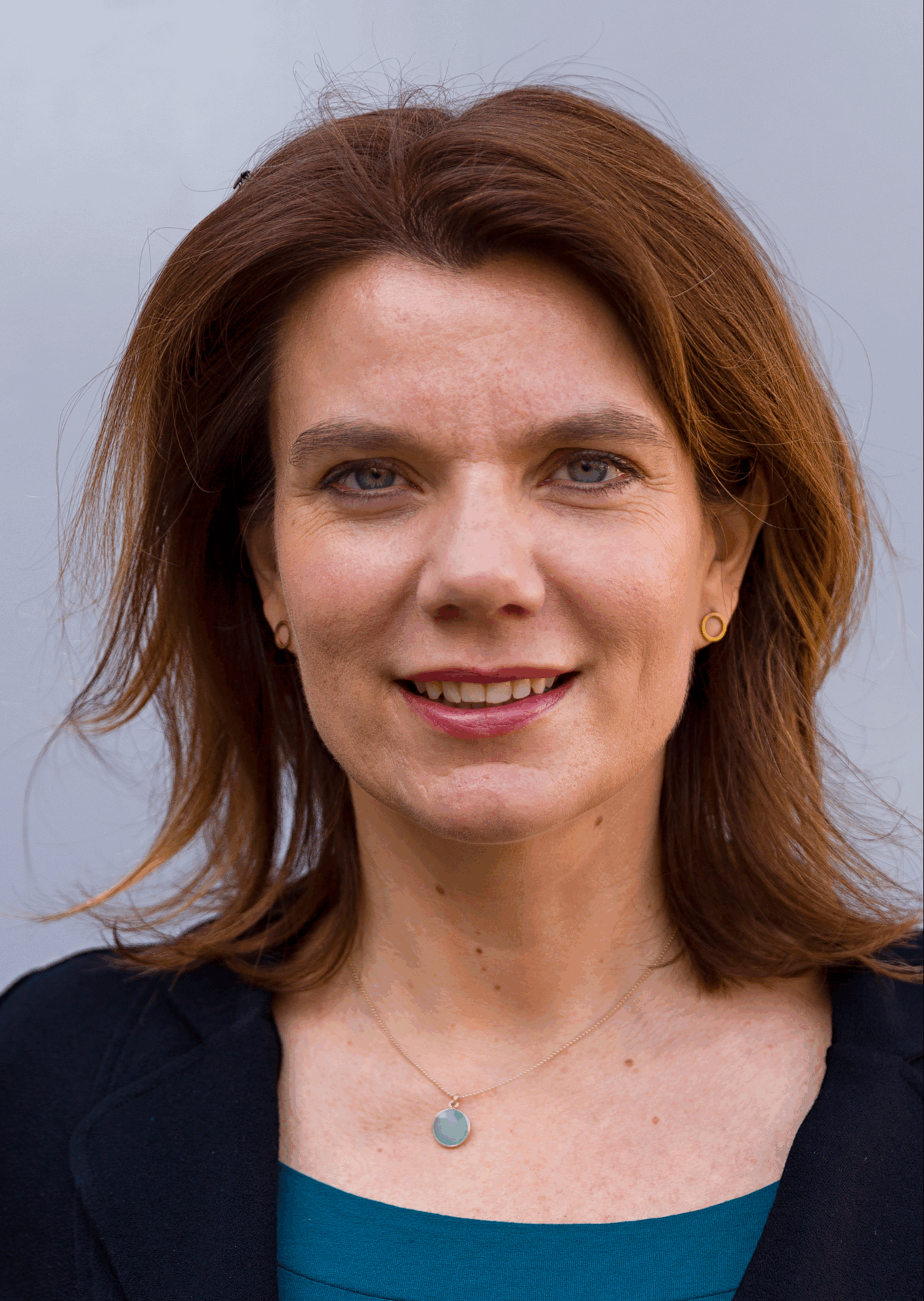
Neuroscientist Karin Roelofs sees science as an ‘antidote’ to populism in Europe. In January, she will join the Board of the European Research Council (ERC), the organisation that distributes millions each year to Europe's top researchers. A position that suits her perfectly.
At the end of September, the phone rang. On the line was former Nobel Foundation Board Chair Carl-Henrik Heldin, also co-founder of the European Research Council (ERC). He wanted to know whether Karin Roelofs was interested in joining the board of Europe’s leading scientific organisation. ‘I already knew that I had been nominated,’ she says. ‘It turned into a very nice hour-long conversation in which he answered all the questions I still had.’
ERC grants
The ERC, founded in 2007, annually distributes grants to excellent researchers in Europe. Scientists can apply for a Starting Grant, a Consolidator Grant, an Advanced Grant, an ERC Proof of Concept, or a Synergy Grant. The various grants are intended for researchers at different stages of their careers. Applications are not reviewed by the Board, but by panels. The Netherlands ranks fourth when it comes to succesful ERC applications.
It goes without saying that she accepted his invitation to become a member, as this is an honourable position. The last Dutch person to sit on the ERC Board was Nobel laureate Ben Feringa from Groningen, who stepped down at the end of 2024.
Different countries
Roelofs will represent neuroscience on the 22-member Scientific Council. In Nijmegen, she works as a professor at the Donders Institute and the Behavioural Science Institute. The ERC Board is composed of top scientists from different countries and different fields.
‘Membership of this Board is a position in which I would love to serve for a lot of reasons,’ she says. ‘One of the most important ones being that I see science as an antidote to populism in Europe.’
Roelofs believes that the better researchers unite, the more forcefully they can respond to ‘alternative facts’ and the tendency of populist leaders to discredit science.
‘It is not only national governments that are becoming increasingly right-wing, the same thing is happening within the European Parliament. There is increasing pressure to do research on topics that politicians consider important, instead of leaving room for fundamental and independent research. The ERC is there to safeguard a broad layer of knowledge. I see science as the immune system of a healthy Europe.’
‘There is increasing pressure to do research on topics that politicians consider important’
As an example, she cites the increased focus on defence, partly fuelled by NATO. There is war in Ukraine, and the continent must arm itself. This seems logical, Roelofs says, ‘but you can never predict where the threat is really coming from’. What she means is that we might bet on defence, only to be suddenly faced by a pandemic like Covid19.
Thanks to science, vaccinations became available at lightning speed. ‘We tend to think that we know where the challenges of the future lie, but history repeatedly shows that we don’t.’
Free research
Roelofs is a warm advocate of free research: curiosity should come from within the scientists themselves, and need not fit into a framework outlined by a government. ‘In times of crisis and scarcity, it is difficult to make money available for this. While real breakthroughs usually come from unexpected quarters. That is something we need to protect.’
The ERC distributes grants to researchers who apply for them themselves, a way of working that is perfectly aligned with Roelof’s beliefs. This allows excellent academics from countries where there is not so much money for science to also rise to the top internationally. The board members, who are responsible for setting out ERC policy, must ensure that all countries compete evenly and have equal opportunities.
‘The money should not only go to the happy few in Western European countries such as Germany, England, France, and the Netherlands. Southern and Eastern Europe should also be adequately covered. I also see science as a form of emancipation.’
‘No field in the world is so obviously internationally organised as science’
Another task facing the ERC is keeping the continent together when it comes to research, says Roelofs. England withdrew from the organisation after the Brexit, but is now partly back in. The Council wants to prevent European countries from thinking they can better organise their science at national level and dropping out as a result. ‘What we have is unique. No field in the world is as obviously internationally organised as science.’
Three grants
Specifically, for Roelofs, membership of the ERC means a week of meetings with the other board members five times a year and, in addition, she will participate in one or two subcommittees. This work is in addition to her duties as a researcher at the Donders Institute and the Behavioural Science Institute.
She herself was the recipient of three grants from the European Research Council: a Starting Grant (2012), a Consolidation Grant (2017), and an Advanced Grant. The last one, amounting to €2.5 million, she secured in 2025. With that grant, she plans to start a project next year that investigates the relationship between body and brain when people have to make decisions under great pressure.
Roelofs is an expert on stress. Previously, she studied how people – for example police officers – make choices under high stress. As long as she is on the Council, she will not be allowed to submit new applications to the ERC for research funding.
LarisaThady schreef op 24 februari 2026 om 14:12
Thank you so much!