RU student deported from the West Bank by Israel: ‘My family and friends couldn’t get in touch with me’
-
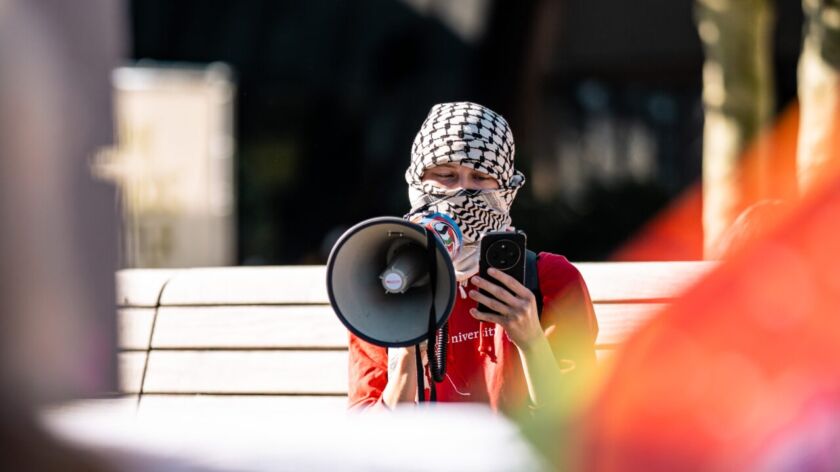 Nessa. Image: Johannes Fiebig
In early October, Nessa flew to the occupied West Bank to show solidarity with Palestinian olive farmers. The student was arrested along with three other activists and sent back: ‘They held us at gunpoint.’
Pro-Palestinian activists from around the world regularly travel to the West Bank to support Palestinians. One of them was Radboud student Nessa* from Germany. ‘I was planning to stay in the village of Jamma’in for a few months, but I was deported within a week,’ they say. At the time of the interview, Nessa has been back from the West Bank for just a week.
Despite the Ministry of Foreign Affairs’ red travel advisory, the student at the Faculty of Philosophy, Theology, and Religious Studies boarded a plane bound for the West Bank.
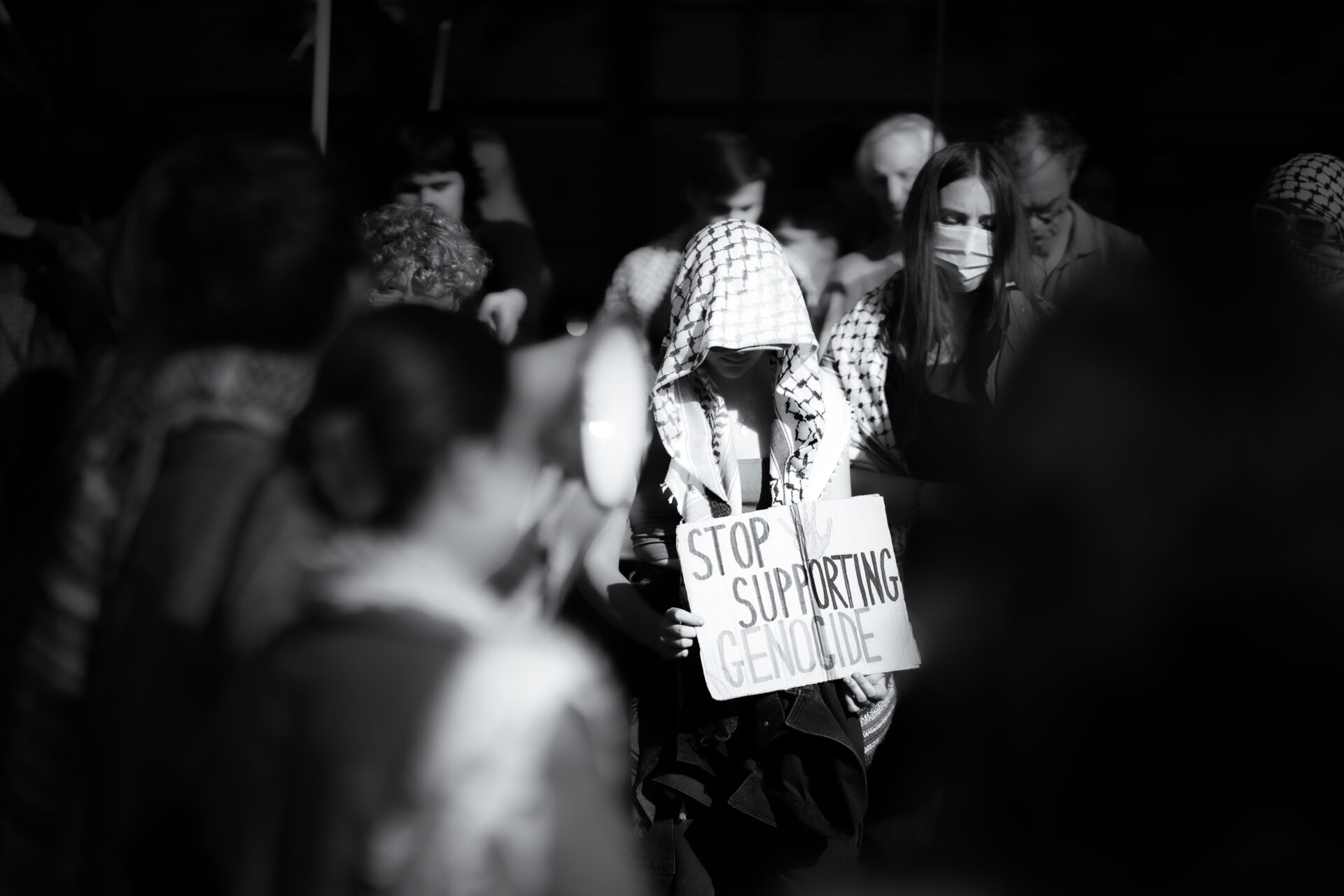
‘Both the Dutch and the German governments are complicit in the genocide of Palestinians. Radboud University also still has ties with Israel, and works with companies and institutions that support genocide. Since I pay my tuition fees here, I feel directly responsible for resisting this violence,’ Nessa explains.
Solidarity
Through the International Solidarity Movement, Nessa came into contact with a Palestinian community in Jamma’in, near Nablus. Nessa won’t share details about the movement, how the trip was prepared or the other activists who were there: ‘I don’t want to put anyone in danger.’
Because of that potential danger, Nessa’s family and friends were very worried about their plans: ‘Of course they found it scary that I was making this trip. But mostly I felt a lot of support from them.’
In the occupied West Bank, apartheid is noticeable everywhere, Nessa describes: ‘At checkpoints, the Israeli army let me drive straight through. Palestinians sometimes have to wait there for hours. How you are treated depends on which licence plate you have.’
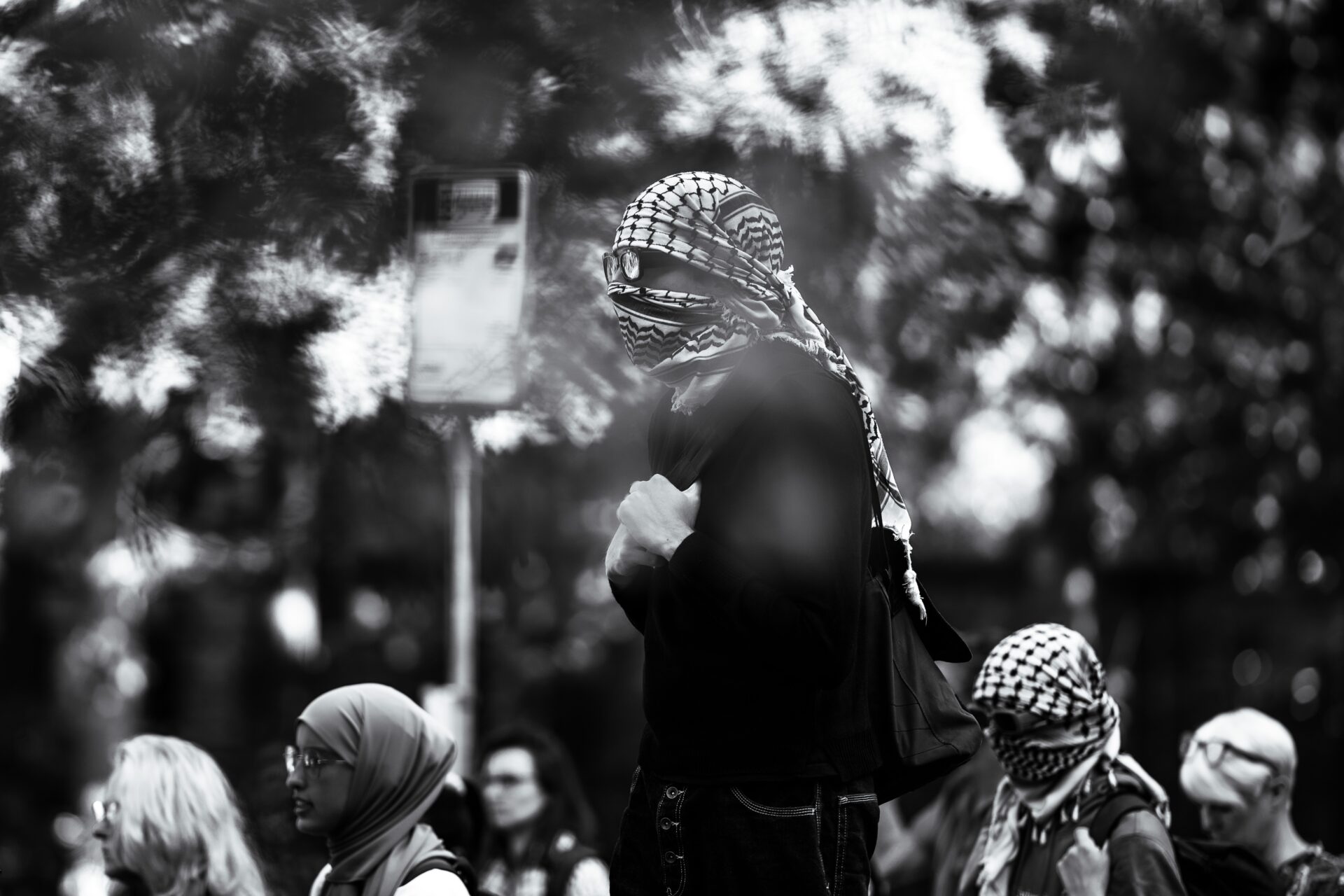
In the occupied territory, the student took part in solidarity presence, a form of activism in which you show solidarity with Palestinians by being physically present with them. For example, activists take children to school or accompany shepherds as they work. Nessa helped Palestinian olive farmers during the annual olive harvest.
To most people, these seem like simple everyday activities. But, Nessa explains: ‘Palestinians risk their lives just by going outside.’
In the West Bank, violence against Palestinians is a daily occurrence: ‘The day before I arrived, settlers shot dead a man from the community at his front door. The day after my deportation, a family was badly beaten during the olive harvest. Among other injuries, they suffered fractured skulls and a broken back.’
Increasing violence
Palestinian olive farmers are particularly vulnerable to violence. According to Nessa, Israeli settlers do everything they can to make the olive harvest impossible: ‘Settlers deny farmers access to their olive groves and set olive trees on fire. They also seize farmland so they can expand their settlements.’
Palestinian farmers who do manage to reach their land face aggression, especially during the annual olive harvest. The UN agency OCHA reports, for instance, that between 13 and 19 October, 69 Palestinian olive farmers were injured by Israeli settlers while working.
According to Nessa, around a hundred thousand Palestinians depend economically on the olive harvest. The violence affects them not only financially, but also socially: ‘The annual olive harvest is a real moment of community. Young people return to their parents’ homes to help their families with the harvest.’
Masks and weapons
And it was precisely during an olive harvest that things went badly wrong. On the day of their arrest, Nessa went to an olive grove with three other activists to help farmers with the harvest.
‘After about twenty minutes of harvesting, the first settlers arrived, masked and armed. They shouted and pelted the farmers with stones,’ Nessa recalls.
Shortly afterwards, soldiers from the Israeli army arrived. ‘They told us we were in a closed military zone. We were given five minutes to leave.’ The soldiers did not show any concrete evidence for these claims.
‘The army used tear gas and escorted us off the land at gunpoint,’ says Nessa, ‘even though we hadn’t used any violence ourselves.’ One Palestinian farmer was beaten so badly that he had to go to hospital.
Nessa and the three activists then went to another olive grove to help farmers there with the harvest. Two hours later, settlers appeared on the land again, this time on quad bikes.
Once again, the farmers and activists were told to leave, but this time without any reason given. According to Nessa, everything then happened very quickly: the settlers seized the activists and held them until the police came to collect them. The officers then took them to the police station in Ariel.
Charges
After the arrest, the activists were put together in a police cell. One by one, they were questioned by officers. They had no access to a lawyer.
‘According to the charges, I entered a closed military zone two times,’ says Nessa. The student is unable to show the charges: ‘I wasn’t given any document setting out the charges against me.’
The student firmly rejects the suggestion that they were actually involved in a criminal offence: ‘No. I was helping Palestinians harvest their crops and I was filming the violence being done to them.’
No contact
After about ten hours in the cell, the activists were transferred by the border police to the deportation centre at Ben Gurion Airport.
During the two nights Nessa spent in detention, they did not see a lawyer. Phone calls were not allowed: ‘My family and friends knew I was being held, but they had no idea where I was. The German embassy couldn’t reach me either.’
The activist deliberately cooperated with their deportation, because appealing is expensive. ‘A lawyer costs 1,500 euros, and most people who appeal lose their case anyway. You’re really only postponing your deportation.’
Despite the harrowing days in detention, the activist stresses: ‘Compared to Palestinian prisoners, I am very privileged. I’m not being held for years without charge, and I haven’t been tortured or killed.’
Back in Nijmegen
On the day of the deportation, Nessa was led onto the plane in handcuffs. ‘The cabin crew kept my passport until we landed.’
The student looks back on the trip and the deportation with mixed feelings: ‘I get a lot of support from my family and friends, but I’m still processing it all mentally.’
Even after Nessa left, the violence against Palestinian communities has continued. On 27 October, a large-scale raid took place in Burin, a village about 15 kilometres from Jamma’in. The Israeli army detained 60 Palestinians, including Ghassan Najjar, the founder of a farmers’ organisation.
For Nessa, the deportation proves that international solidarity works: ‘The Israeli government goes to great lengths to stop us.’
The experience in the West Bank has only made the activist more determined: ‘I’m now banned from entering Israel for five years, otherwise I would do it again in a heartbeat. For now, I’ll keep up my activism on campus until all ties with Israel are cut.’
*Nessa’s real name is known by the editoral office of Vox.