Train and ferry travel no longer required to be booked through controversial travel agency DGI
-
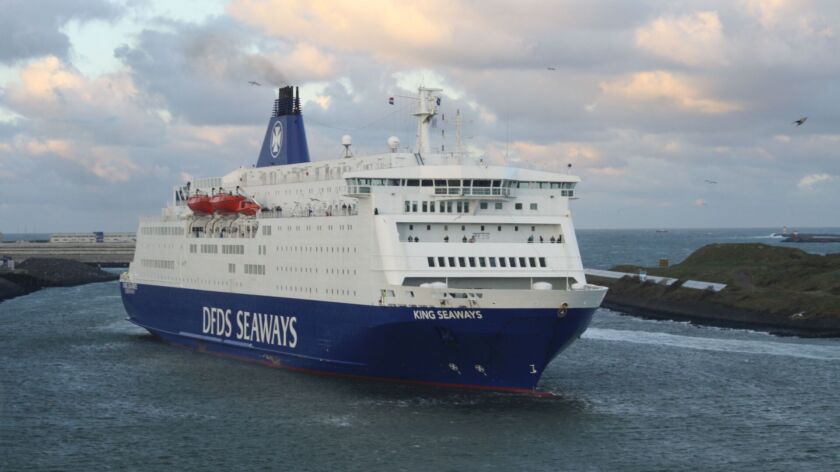 Een veerboot in IJmuiden. Foto ter illustratie, door Robert Cutts via flickr
From June 1 onward, Radboud employees will no longer be required to book work-related train and ferry travel through DGI Travel. Interim vice president Marcel Wintels announced this during the Joint Assembly. Flights, however, will still have to be booked through the controversial travel agency until October; accommodation arrangements may be made independently.
A major relief for employees of Radboud University: from June 1 onward, work-related train and ferry travel, as well as accommodation bookings, will no longer have to be arranged through travel agency DGI Travel. Vice president Marcel Wintels shared the news yesterday during the university’s Joint Assembly.
Employees who wish to do so will once again be free to book train or ferry trips themselves. The same applies to overnight stays in hotels and Airbnbs. All bookings must be made directly, however, and not through another travel agency.
Frustration
Booking travel through DGI Travel has caused frustration among employees for over a year, both within faculties and support services. Colleagues from one department even kept a blacklist documenting negative experiences.
Among other issues, the agency’s accuracy was reportedly lacking. Many employees also say that booking trips through DGI Travel is significantly more expensive than arranging them independently, and that the process is very time-consuming. According to privacy law professor Bart Jacobs, the travel agency also operates in violation of privacy legislation.
Flights
Booking flights must still be done through DGI Travel until at least October 1. According to vice president Wintels, an important reason for this is the university’s duty of care toward its employees. In case of a war or another disaster, for instance, the travel agency can immediately determine which employees are in the affected region and investigate how they can be safely repatriated. ‘In that respect, DGI performs well,’ Wintels said.
Wintels also cited the accountability requirements surrounding sustainable travel as a reason for continuing to work with DGI for flights.
We are informing DGI Travel they need to improve their performance
The contract with DGI Travel will therefore remain in place for the time being. ‘We are informing them they need to improve their performance. At the same time, we are looking internally at whether the process can be simplified, and we also want to establish a user council,’ Wintels said.
The vice president expressed hope that DGI Travel will be able to provide better service over the next months. If the agency fails to do so, flights may also no longer need to be booked through DGI after October 1. ‘In that case, the university will look for an alternative solution to fulfill its employer duty of care, so that we know where all employees are at any given moment.’
Policy proposal
Members of the university’s employee representative bodies introduced a proposal this spring to scale back and make the use of DGI Travel for bookings voluntary. On the one hand, they proposed ending the mandatory booking of train and ferry travel through DGI Travel. One reason mentioned in the proposal is that user experiences show that DGI does not provide online access to affordable international rail products such as Interrail passes or night trains, and is difficult to work with regarding ferry bookings.
Initiators Inge Bleijenbergh and Bart Voorn described this as a perverse incentive: “A system intended to promote sustainability is in fact encouraging environmentally unfriendly behavior,” the proposal states. The representatives also proposed allowing employees to choose for themselves whether or not to use the travel agency for all travel bookings.