Former Radboud University scientist manipulated data; the university launches additional investigation
-
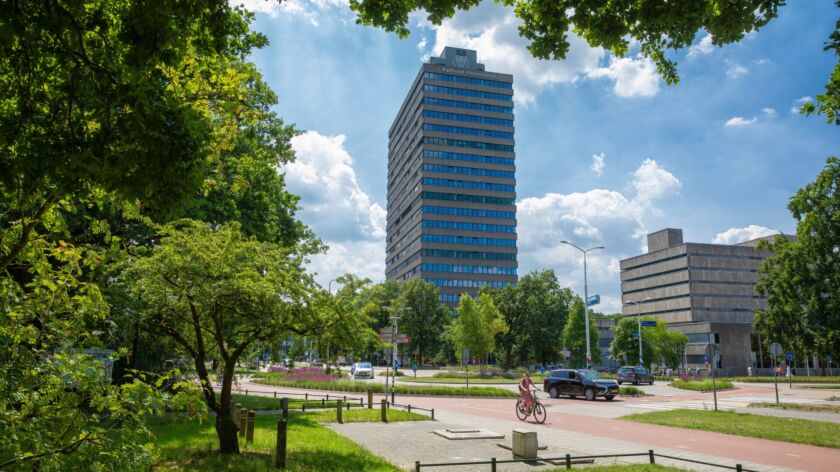 De Radboudcampus. Afbeelding ter illustratie. Foto: Dick van Aalst
A scientist from Radboud University fabricated or manipulated data in at least one publication. This is stated in a report published last Friday by the Radboud University's Research Integrity Committee. The person has already been dismissed with immediate effect last year and left under a settlement agreement. The university will conduct further investigations into other publications by the former employee.
A scientist from Radboud University violated scientific integrity in an academic article published in 2025 by fabricating and/or manipulating data. This is the conclusion of a report by the Committee on Scientific Integrity of Radboud University, which was published last Friday on the website of Universities of the Netherlands. The committee investigated the scientist after a complaint was filed against him in June 2025.
The case concerns a former employee who had already been summarily dismissed before the investigation and left under a settlement agreement. According to the report, this dismissal was “for a reason other than the violation of scientific integrity”. The identity of the individual and the department he worked in have not been disclosed. It is noted, however, that he is now “no longer active in academia”.
High number of duplicates
Colleagues from the department where the scientist worked raised concerns after his departure. According to the report, they were “concerned about the scientific integrity of the defendant”. These concerns arose following his dismissal, “identified irregularities in the way the defendant handled data”, and “signals suggesting suspicions of data fabrication at a previous employer”.
Defendant: “No violation of scientific integrity”
The defendant acknowledges the duplicates in the article, the report states. However, he claims they were the result of “a human or technical error, not intentional misconduct”. Therefore, he argues that there was no violation of scientific integrity.
After being informed of the irregularities in the dataset, the former employee requested that the journal in which the article was published retract the publication. That process is still ongoing. He “regrets that the complainants filed a complaint” and believes that “their attitude is vindictive and punitive in nature”.
The complaints mainly relate to the strikingly high number of duplicate entries in the publicly available dataset used for the article in question. After investigation, the committee concluded that the number of duplicates is indeed remarkably high, and that the occurrence of so many duplicates occurring in a dataset is “highly unlikely”. The respondent did not provide the raw data to the committee. The data could also not be found in the working group folders or the software tools to which the committee had access. However, such data should be available for verification in scientific research.
Complaint upheld
The committee concludes that the man violated several principles of the Code of Conduct for Scientific Integrity, including: “do not fabricate data or research results and do not report fabricated data or results as if they were real”, and “do not remove or alter results without explicit and proper justification. Do not add fabricated data during data analysis”. The committee therefore advises the executive board to declare the complaint against the former employee well-founded.
In a statement on its website, the university writes that “due to the seriousness of the violation”, the executive board has decided to conduct “a broader investigation” into articles the scientist was involved in during his time at the Nijmegen-based institution. The report also suggests this as an additional measure.
A university spokesperson said that the executive board will be advised by the committee on how to design this broader investigation. ‘Further details and any conclusions will be shared after the investigation is completed.’
Anonymized
Another suggestion – namely, not to publish the report anonymously – has not been adopted for now. “Because the report currently concerns findings related to only one article”, the university has chosen to keep the scientist anonymous, according to the website.
Due to privacy considerations, the spokesperson declined to answer further questions about the former employee or the investigation.