Summer Interview (2): Communication scientist Rebecca de Leeuw on resilience and her son, who was born deaf
-
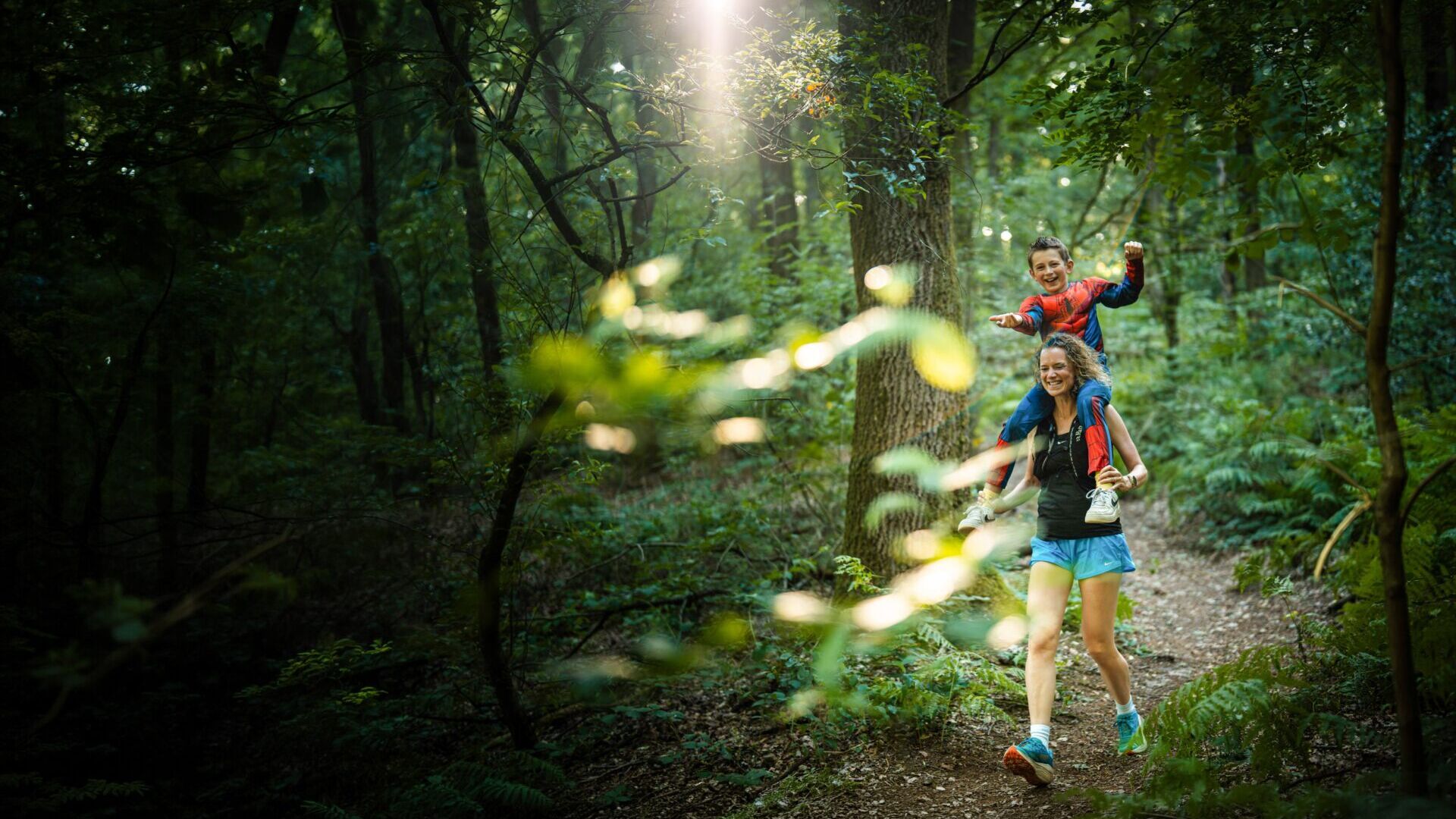 Rebecca de Leeuw en haar zoon Fynn. Foto: Johannes Fiebig
Recently, communication scientist Rebecca de Leeuw learned that her son is not only deaf but will also progressively lose his sight. Optimism and wonder form the guiding thread in her private life and her work. A conversation about zebrafish, beauty logs, Moana, and deaf children in Rwanda.
During Halloween last year, Rebecca de Leeuw (47) took part in a spooky walk in the evening with her family and friends. Her youngest son, Fynn (11), kept holding her hand. Not because he was scared, but because he couldn’t see well in the dark. There had been signs before, but now she knew for sure that something was wrong.
Fynn was born deaf and wears cochlear implants that allow him to hear. When he was a baby, the rare Usher syndrome was briefly suspected. In this condition, children are born deaf or hard of hearing and later lose their sight as well, often leading to deafblindness. But it didn’t seem like that at the time. After Halloween, De Leeuw suspected that Usher syndrome was indeed the case.
Biography
Name: Rebecca de Leeuw
Place of birth: Zevenaar, the Netherlands
Education: Bachelor’s degree in Primary Education (Pabo); Master’s degree in Educational Sciences
Current position: Department of Communication Science, Faculty of Social Sciences
Other roles: Chair of the Fynn Foundation; Strategic Connector for the Usher Syndrome Foundation
Grants: Secured nine grants to support deaf children and their families
Extensive examinations followed at the Radboudumc, which revealed that Fynn’s vision is affected and that he suffers from night blindness. His field of vision is expected to gradually narrow to tunnel vision, eventually resulting in complete blindness. De Leeuw was particularly devastated when the ophthalmologist explained the results further.
‘I was shocked by how advanced it already was. At night I lay awake, and in the early morning I cried very hard,’ she says. ‘People often think I am always optimistic and cheerful. That is not the case. I think I actually go very deep, but then I quickly become hopeful again.’
Zebrafish
For days, De Leeuw read everything about Usher syndrome and the scientific research surrounding it. That is how she discovered that encouraging developments are underway. ‘The chance of Fynn becoming completely blind is very small, because scientists are already very advanced with gene therapy.’ The research into zebrafish is also fascinating, she explains enthusiastically.
‘They can do something that we humans cannot. When the light-sensitive cells in our eyes are destroyed, we form scar tissue and become blind. When these cells are damaged in zebrafish, miraculously, they produce new cells and maintain good vision. Scientists at Radboudumc are conducting research into unlocking this hidden repair system so they can cure people with Usher syndrome. That is incredible, right?’
“We hope my son will still have vision comparable to looking through toilet paper rolls.”
But for now, results are expected primarily from research into exon skipping, a form of gene therapy. ‘At the moment, we assume that Fynn will lose his sight in the near future, but that this can be stopped in about ten years. We hope that he will then still have vision comparable to looking through toilet paper rolls. Fynn himself indicated that this is enough for him to see everyone he loves and to enjoy everything.’
In the most ideal case, the damage to his eyes will even be fully repaired. ‘In the meantime, I have become involved with the Usher Syndrome Foundation and am contributing to accelerating scientific research.’
De Leeuw draws a lot of strength from how Fynn himself handles the situation. ‘When I told him the news, he cried very hard at first. He came to sit on my lap, and after we hugged, he said: “This doesn’t mean I can never enjoy things again.” I thought that was so wise. Fynn is still young and lives day by day. We can learn a lot from that. Why should we worry about a future that will probably look very different from what we can imagine now?’
Magical
The way De Leeuw approaches Usher syndrome says a lot about her. In addition to her optimistic attitude, she is often filled with wonder about the things in life. This was also the case when Fynn received his implants.
‘From out of nowhere, he could hear. It moved me when he heard our voices for the first time and showed an enchanting smile. And there was a moment not long after he got his implants when we heard a dog barking behind the fence. He looked at me and gestured ‘dog’. That was magical; it’s wonderful that doctors made this possible.’
Just like De Leeuw, her son wanted to know everything about the cochlear implant (CI). He gave a presentation about it at school. During his preparation, he discovered that the CI was invented by ENT specialist and scientist Graeme Clark.
‘Other scientists did not believe in his idea of enabling deaf people to hear with a ‘bionic ear’. But a wealthy Australian businessman with his own TV channel thought it was a wonderful idea. He organized several large-scale television marathons, raising a lot of money. Graeme Clark then had to find someone willing to undergo the surgery, which was still risky at the time. Rod Saunders was up for it, even though it could have cost him his life. Every single one of them is a hero. The story shows that the existence of CIs is anything but self-evident.’
Beauty logs
How she views the world is also reflected in her university work as a lecturer and researcher. De Leeuw finds great fulfillment in teaching her course Entertainment, Media, and Well-being. In the course, students learn all about storytelling, positive media psychology, and transcendent emotions such as wonder and being moved by love. In addition, students keep beauty logs for seven weeks.
‘Every week, they write down what beautiful things they have seen regarding natural beauty, human-made beauty, and moral beauty—for example, unconditional love or compassion. Most students find this a very enjoyable assignment. They indicate that it has given them a greater appreciation for all the beautiful things in life, especially nature and all the sweet people around them.’
Hero on an adventure
In her research, De Leeuw looks at how media stories can be meaningful for children. She co-authored a recently published study on the Disney film Moana. This animated movie is about a girl who sails out onto the ocean in her boat to save the world.
‘Moana has many strong character traits; she is very brave, she doesn’t give up, and she works well with others. The children watched her with admiration and connected what they saw to their own lives. For instance, they were inspired by Moana to persevere and not give up when things get tough, like when solving complicated math problems.’
The film also shows the girl rebelling against her father. ‘Young children thought this was very naughty, while older children actually thought it was very good; it made them think about their own identity. This indicates a receptivity to a story.’
The film follows the classic structure of The Hero’s Journey—a story in which a ‘hero’ goes on an adventure, must endure great trials, and returns with new wisdom. De Leeuw notes that knowledge of storytelling helps her as well. ‘When I have an all is lost moment, I know what to do. Then I realize that life simply involves things going very wrong from time to time. Stories show us time and again what resilience and perseverance can bring us, and that there are always others to help us.;
Helping deaf children
A meaningful story can also go beyond inspiration. That happened to De Leeuw and her family when they saw a video of a fifteen-year-old deaf boy from Uganda learning sign language. The boy completely blossomed.
‘We were touched. It was so beautiful! But also sad because he was already so old, at least compared to Fynn. When Fynn was just a baby, we already received help, and we learned sign language together with friends and family during a weekly course. We discovered that of the 34 million deaf children in the world, less than two percent get this opportunity. They are completely locked inside themselves. We wanted to do something about that.’
In 2017, when her son was nearly three, De Leeuw and her family founded the Fynn Foundation. First, they researched what was already being done for deaf children and began supporting existing projects. Soon, they started charting their own course.
“We wanted to focus on one place, where we hope to create lasting change.” That place became Rwanda. By now, the Fynn Foundation has been able to help 179 families.
‘Initially, it was very project-based because the country doesn’t have a healthcare structure like we do here. But now, together with our Rwandan partners, we are trying to establish this structure and hope that the government will also contribute. For example, it would be wonderful if an audiology center were established. In addition, we will also commit to helping deafblind children.’
Families receive sign language instruction at home, ensuring that everyone can communicate and participate. In addition, parents attend sign language classes together with other parents, giving them the opportunity to share experiences and support one another in advocating for their children. Sign language courses are also provided in mainstream schools for both teachers and hearing students. ‘This makes inclusive education possible. Deaf children attend school alongside their hearing peers.’
Madagascar
Back to her son. Although she is optimistic about Fynn’s future, she wants to ensure he sees as many beautiful things as possible while he still can. ‘Just to be safe. After all, the secret of the zebrafish has not yet been discovered.’
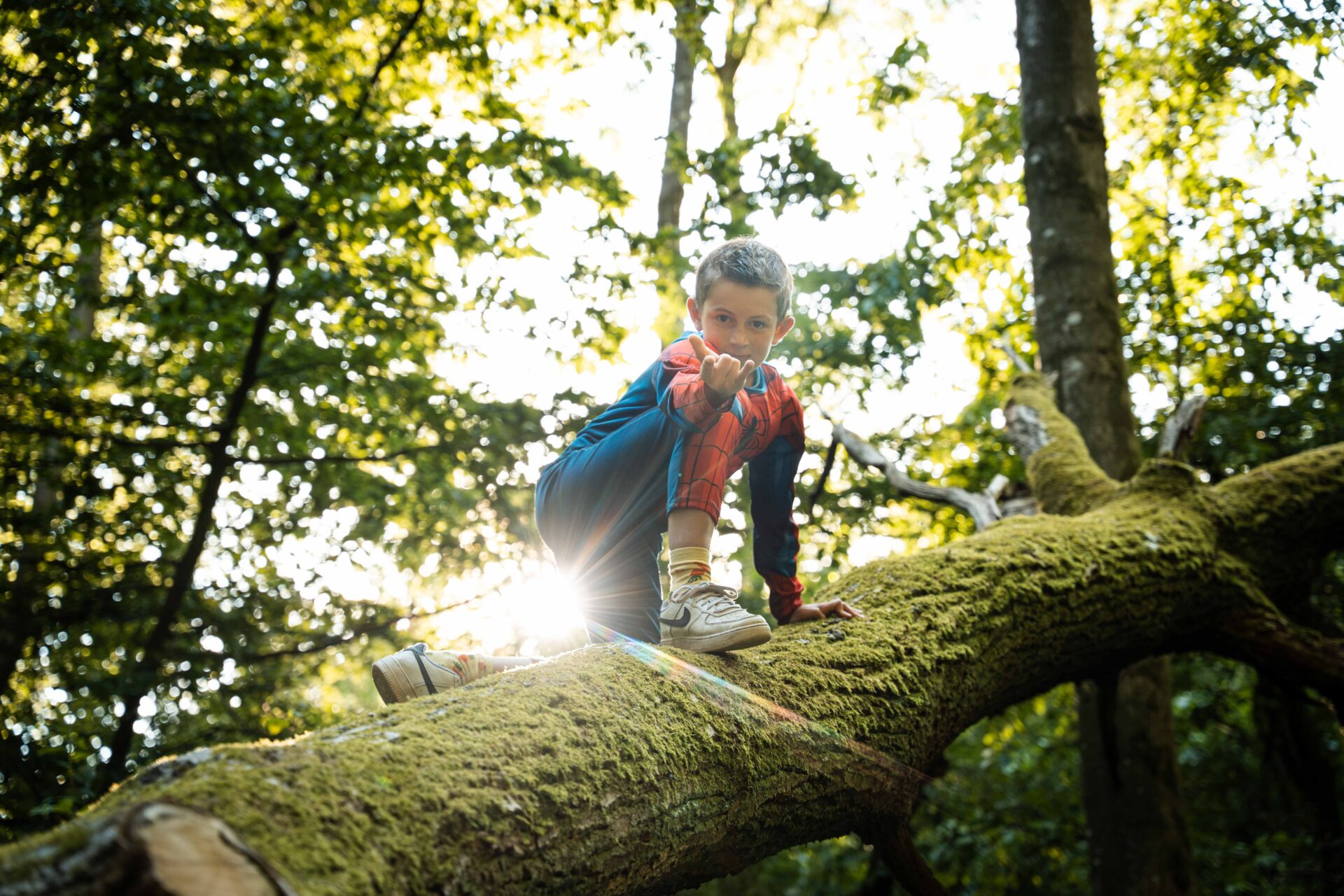
Fynn really wants to go to Madagascar. That wish had been alive in the family for some time, partly because of the sandy beaches there. Due to the diagnosis, they are no longer waiting and will catch a flight next summer—first to Rwanda and then to Madagascar.
‘Madagascar has a sandbar that you can walk across at low tide from one island to another. This is said to be one of the most beautiful beaches in the world. Animals live there that can be found nowhere else.’ The family is currently cutting back to afford the trip. ‘For instance, we are no longer going out to dinner and we have canceled many subscriptions.’
Fynn has already figured out everything he is going to do. ‘He really wants to go diving and search for unusual animals in the jungle.’
Trail marathon
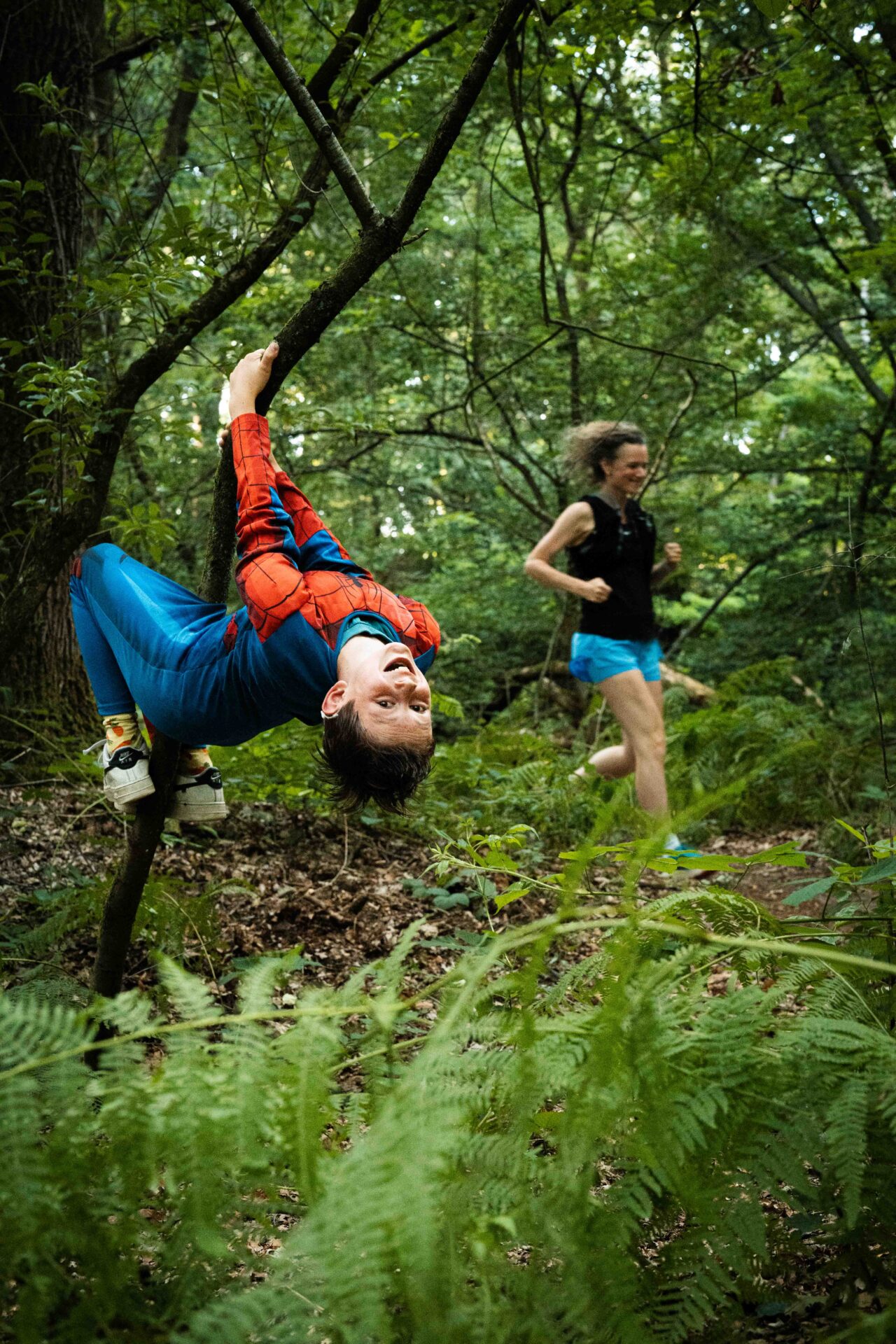
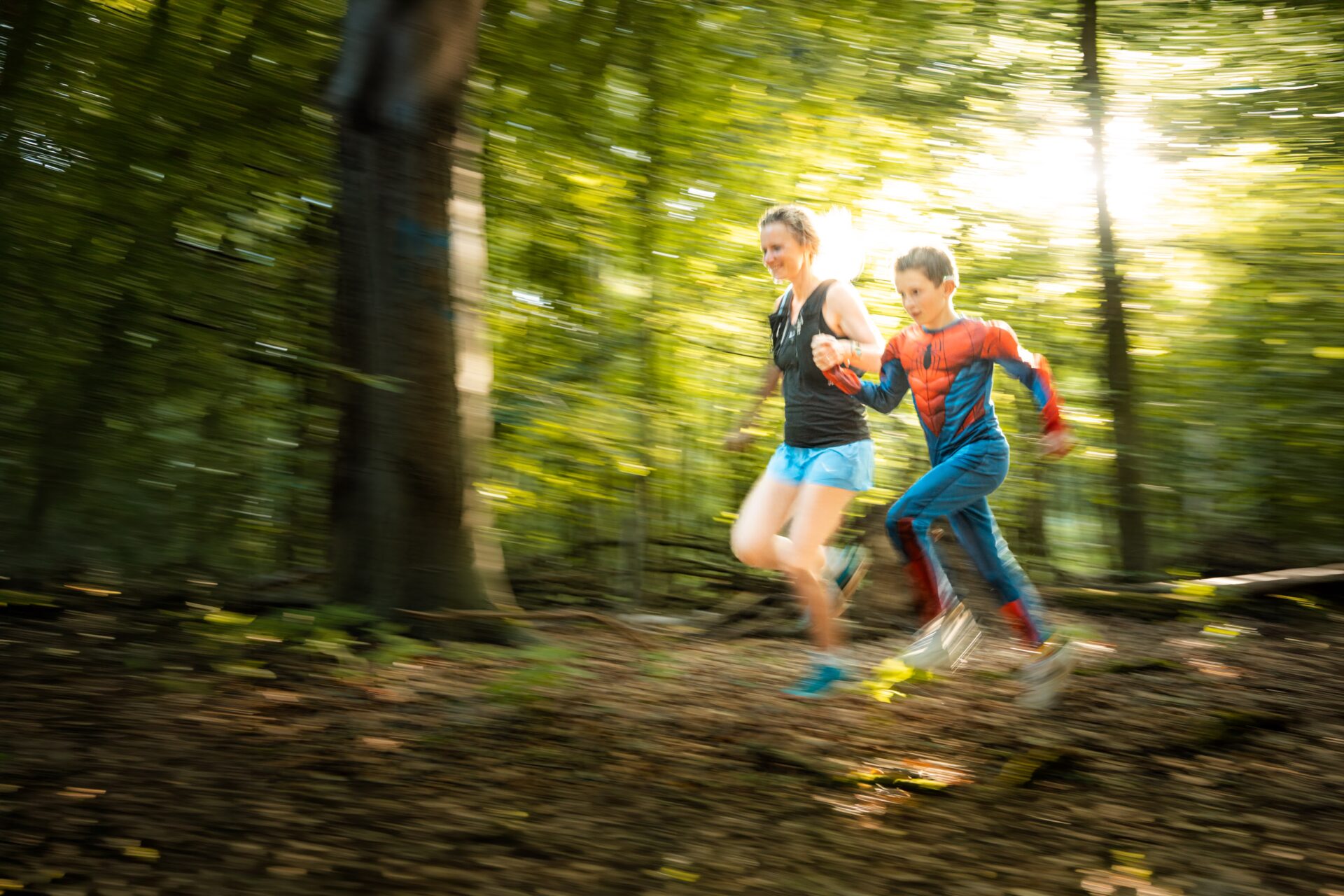
Before that happens, De Leeuw will first run a 43-kilometer trail marathon through wild nature this summer. Later this year, a 50-kilometer ultra run is on the schedule. ‘It’s so wonderful to be outside in nature. Even when I’ve just returned and I see someone running, I already want to go again.’
Trail running is said to be tougher than running on asphalt because you go up and down hills and wind over unpaved paths through the trees. But De Leeuw doesn’t experience it as tougher. ‘Because it is so varied, you don’t really notice it; you are constantly distracted: “Wow, how beautiful!” or “What a fun little path!'” With the trail marathon, she is raising money for the Fynn Foundation. This will help seventeen deaf children and their families in Rwanda.
After Fynn’s diagnosis, De Leeuw and her family received many loving responses. What made a deep impression was the reaction of Elie, her primary partner in Rwanda. ‘Often, when people in the Netherlands heard about it, they said: “How awful!” Elie didn’t react that way at all. He was very calm and had an accepting attitude. When I told him I found that so striking, he explained that he trusts everything will be fine because healthcare is so good in the Netherlands.’
She laughs. ‘That is the same trust we have. And besides being hopeful, we enjoy how incredibly beautiful life is every day. It’s just like Fynn always says: “Life is one big adventure.”‘
Our other Summer Interviews:
1. Spinoza Prize winner Karin Roelofs: How a tiny mouse sparked a major study on stress
3. Jan Mustafa fled Syria — in Nijmegen, his main goal is helping others
4. Wheelchair basketball star Bo Kramer (27): ‘As an elite athlete, you have to love pushing yourself to the limit’
5. Sander Leeuwenburgh, the dentistry professor turning full-time pianist
6. Hans de Kroon, the ecologist who explained why you no longer need to clean bugs off your windshield (because there are hardly any left)
7. Professor Paul van der Velde: ‘People often think I’m a Buddhist’