Police officer to appear in court for severely injuring protester with police dog
-
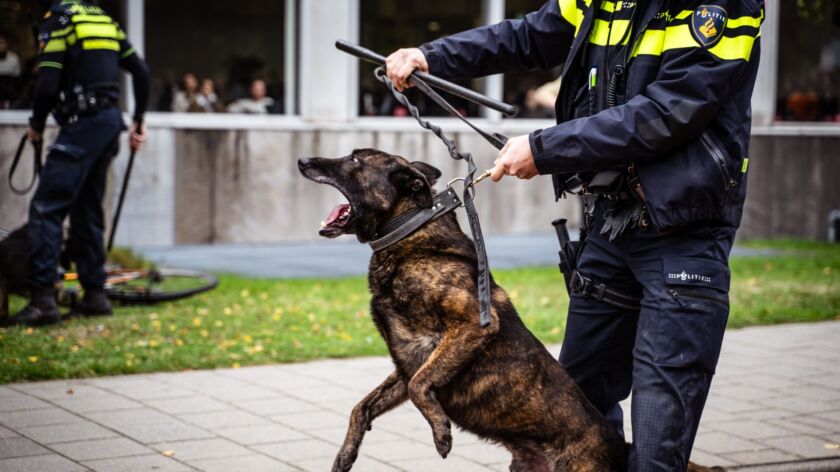 De hondengeleider op de foto is niet de hondengeleider uit het verhaal. De foto is bij een andere inzet op de campus gemaakt, later dat jaar. Foto: Johannes Fiebig
The use of a police dog against a protester on campus in May last year was unlawful. That’s the conclusion of the Openbaar Ministerie after an investigation by the Rijksrecherche. The officer involved will appear in court, as well a 24-year-old protester. He is accused of violence against two Radboud security guards and resisting arrest.
The use of a police dog against a protester on campus in May last year was unlawful. That’s the conclusion of the Openbaar Ministerie after an investigation by the Rijksrecherche. The officer involved will appear in court, as will a 24-year-old protester. He is accused of violence against two Radboud security guards and resisting arrest.
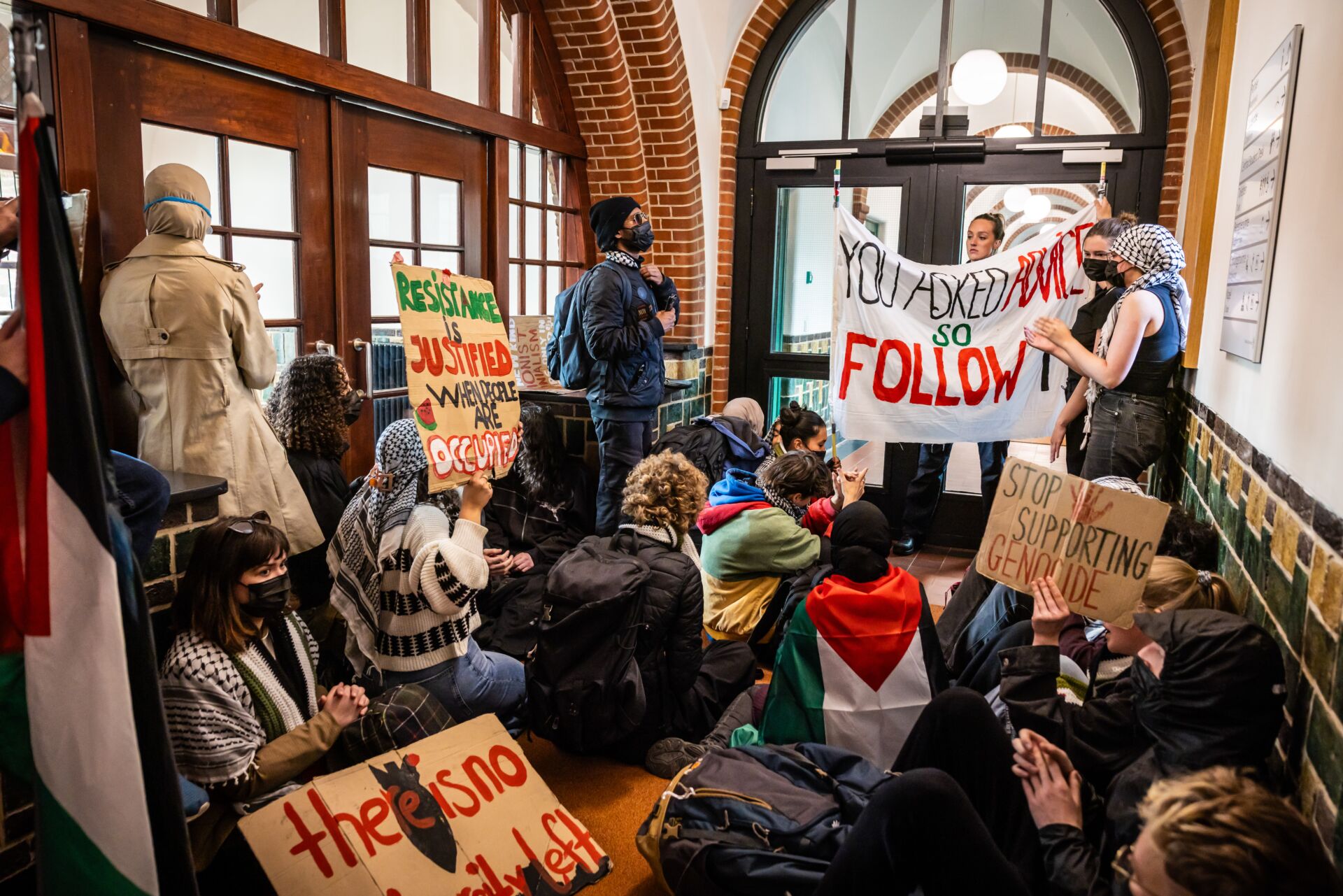
This is the conclusion after an investigation that lasted months. During a demonstration march against cooperation with Israeli institutions on May 7, 2025, the police intervened forcefully. After Executive Board president Alexandra van Huffelen refused to talk to a masked spokesperson for the activists, others entered the administration building and continued to protest there.
A number of them later told Vox that they had been pushed by security guards. The university called in the police, who arrived with fourteen cars. The Houtlaan was closed off and the protesters walked back to the Erasmusplein to end the demonstration. On the Heyendaalseweg, five of them were surrounded by the police, who kept others at bay with batons and dogs. One activist was bitten by a police dog.
The injuries were so serious that the protester had to be taken to the hospital.
Violation of official instructions
The Openbaar Ministerie now considers this to be a violation of official instructions. He will be summoned to appear before a special division of the court that deals with the unlawful use of force by the police.
According to the Openbaar Ministerie, the dog handlers arrived at the scene because of a chaotic situation in which attempts were being made to arrest the 24-year-old demonstrator who had allegedly bitten a security guard. According to the press release, the victim of the dog bite was part of a group that included the suspect and interfered with his arrest. “First, the dog handler—like other police officers—used his baton against the demonstrators. Then he deployed the police dog against the victim,” the press release states.
The Openbaar Ministerie concluded that the use of force was justified. However, as the victim was already lying on the ground and did not resist the police, there was no reason for the officer to arrest them: “The Openbaar Ministerie considers this demonstrator to be wrongly identified as a suspect”.
Response from Radboud
University president Alexandra van Huffelen: ‘It is appalling that one of our students was so seriously injured. This has had a profound impact – first and foremost on the student, but also on other students, staff members and witnesses. It is important that there is now clarity about what happened. The handler of the police dog will have to answer before the court. We will discuss the Public Prosecution Service’s conclusions with the academic community.’
The victim turned out to be a student at Radboud University, who underwent five operations as a result of the dog bite. ‘I was lucky not to lose my leg’, the student told Vox in a detailed reconstruction. ‘It may be a bit graphic to describe, but I saw pieces of tissue dripping from my leg onto the floor of the police car.’
Uncertainty
What bothered them was that the police seemed to take little responsibility for the incident and used dogs again at a later demonstration. ‘There is a lot of media and university coverage about me as the victim, but not enough about the excessive use of force by the police’, said the student.
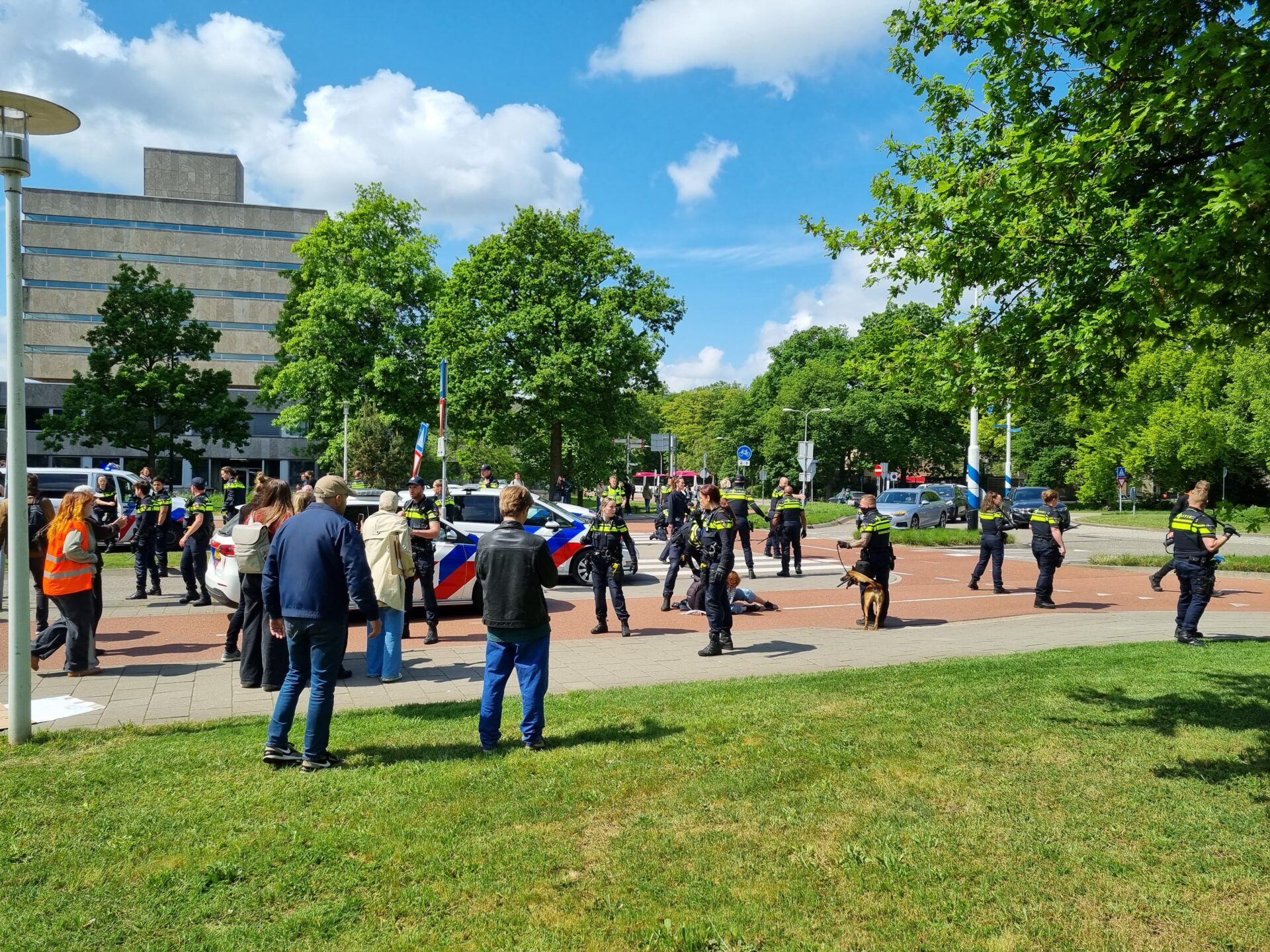
In the past months, the police have said very little about the incident and the reason why the officer allowed the dog to bite when the demonstration was virtually over. The investigation by Rijksrecherche took months. The ombuds person at Radboud University had the case investigated by Bureau Berenschot, but that report did not clear up the uncertainty surrounding the police action.
However, it did emerge that security guards had been attacked by demonstrators in the Berchmanianum; three of them ultimately filed charges for being scratched, pushed, and bitten. For their part, the demonstrators accused the security guards of using violence. Berenschot did not draw any conclusions, but presented both versions side by side.
Response from Nijmegen Student Encampment
A spokesperson said: ‘The conclusion that the use of a police dog was unlawful confirms what we have been saying from the outset. This does not change the fact that one of us was seriously injured and has undergone multiple surgeries. No court case will undo the physical and psychological trauma that has been caused.’
‘In addition, attempts are constantly being made to justify the police action with accusations against demonstrators. It was an escalation that arose after security guards themselves used violence, but in retrospect, accusations against us are being used to justify large-scale police deployment with batons and dogs. Footage that has been available on social media since that day, shows that Radboud security guards were actively involved in the police violence. In that footage, a security guard is even seen on top of a student.’
‘Nevertheless, responsibility is being placed in a strikingly one-sided manner – mainly on individual protesters and one police officer – while the decisions that led to this escalation remain out of the picture. It was the Executive Board that decided to call in the police, thereby creating a situation in which a campus protest ended with police dogs, batons, and two seriously injured students. In general, the police should have no place at a university.’