Nature deliberately made part of the deadly border crossing between Poland and Belarus, research shows
-
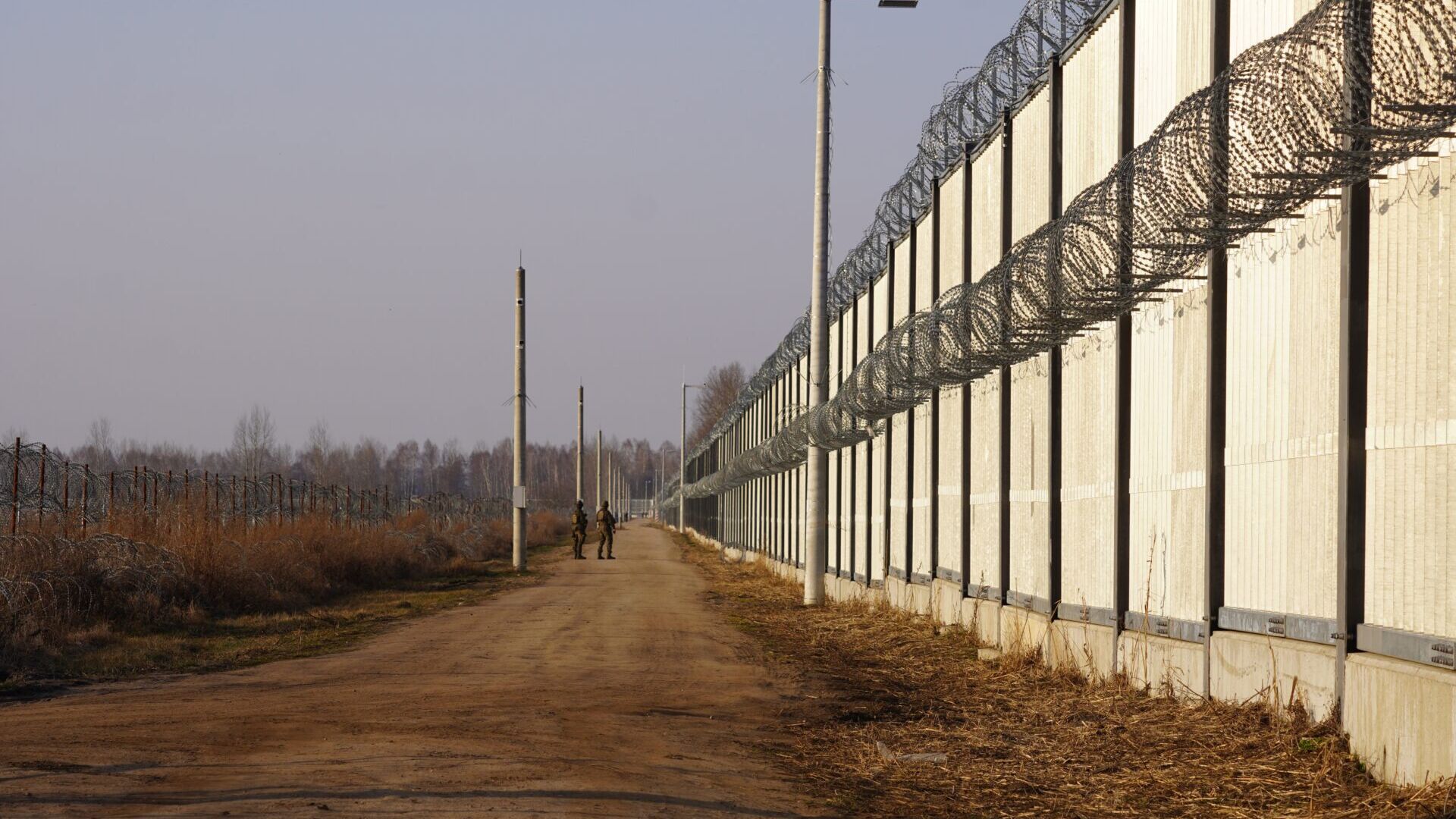 Soldaten patrouilleren langs het hek van de grensbeveiliging tussen Polen en Belarus; maart 2025. Foto: Peter Teunissen
102 refugees have died at the Polish–Belarusian border over the past five years. In the same period, more than 200 migrants went missing in the area. This is the finding of a research report by Border Forensics, to which Nijmegen researchers also contributed.
Since 2021, 102 people have lost their lives while trying to cross the Polish–Belarusian border as refugees. And the toll may well be higher, because 214 migrants went missing in the forests between the two countries over the same period. Among refugees, the border area is known as the death zone.
These are the findings of research by Border Forensics and the research projects The Circumference of Violence and Infrastructuring Nature (see box).
Governments often cite drowning, exhaustion or hypothermia as the causes of these deaths and disappearances. But that is not the whole story, says lead researcher Peter Teunissen.
‘The natural border landscape of rivers, swamps and forests, where people who don’t know the area try to survive, also plays a role. The same goes for the ever-expanding border infrastructure of fences, cameras and drones, and the conduct of border guards. This combination of factors exhausts people, which contributes to how deadly the border is.’
Travel agencies and visas
In the summer of 2021, the Polish–Belarusian border becomes increasingly busy. This is directly linked to deteriorating relations between Belarus and the European Union. Because Belarusian President Alexander Lukashenko cracks down hard on protesters denouncing his fraudulent election victory, the EU imposes a series of sanctions on the country.
Read the story of Afghan refugees Khan and Abdullah, who spent six months in the autumn and winter of 2022–2023 trying to cross the Polish border, risking their lives.
In response, Lukashenko facilitates the flow of migrants from the Global South – think of countries such as Iraq, Eritrea, Syria and Afghanistan – to Europe via his country. By issuing visas, enlisting travel agencies and offering flights, he aims to destabilise the European Union.
‘But of course migrants also have their own reasons for trying this route,’ says Teunissen. ‘If there’s an opening at an external border, as there was in Belarus at the time, they try to make use of it.’
With or without the help of the Belarusian regime, tens of thousands of migrants make their way to Poland’s border, the EU’s external frontier.
Injured on the border fence
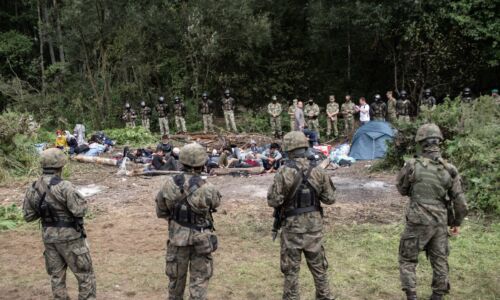
Once there, however, the migrants run into the Polish border police, who send them back to the other side. The Belarusian police then push them back towards Poland, sometimes violently. ‘The migrants are sent back and forth like a ping-pong ball,’ says Teunissen.
‘The Polish border guards use weapons, batons and pepper spray. To reach Poland, refugees have to cross a river. In some sections of the border, there has been a 5.5-metre-high fence topped with concertina wire (razor wire, ed.) since 2022. If people fall off the fence, they get injured. They often try to climb it several times before they succeed, and the injuries accumulate. Sometimes with fatal consequences.’
In the report, the researchers reconstruct ten refugee deaths in detail, including that of Mahlet Kassa, a 28-year-old Ethiopian woman. On 3 February 2023, two fellow refugees alert Polish border guards that Mahlet can no longer stand and that her clothes have got wet in the border zone, in freezing temperatures.
She urgently needs medical help, the migrants say, telling the border police exactly where to find her. But instead of sending emergency services to Mahlet, the border guards send her two friends back to Belarus. Nine days later, volunteers from a Polish NGO find Mahlet’s body near the spot where her friends last saw her.
Mapping platform
Together with the forensic research agency Rectangle, the researchers visualised parts of the report on this website. A timeline lets you scroll through the incidents of violence at the border.
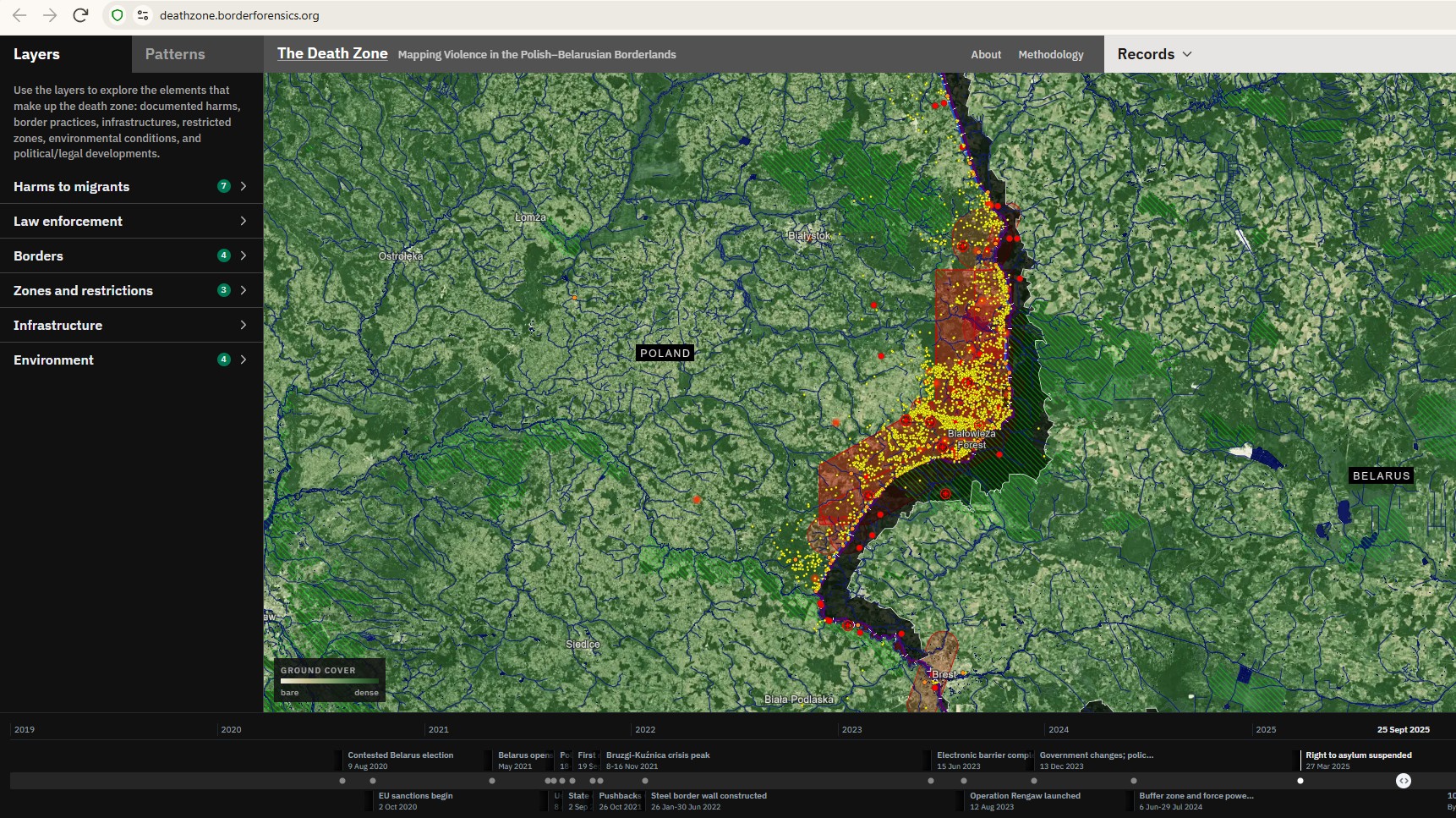
Refugees’ emergency calls often go unanswered by the authorities, says Teunissen. ‘Authorities also prohibit NGOs such as Médecins Sans Frontières from providing aid. And it happens that migrants who seek help, like Mahlet’s friends, are detained and sent back to Belarus while the person who needs help is ignored.’
Donald Tusk
Border guards don’t only use direct violence such as weapons and pepper spray, adds Joris Schapendonk, associate professor of Human Geography at Radboud University. ‘The report also describes indirect violence, for example putting up signs pointing in the wrong direction. This disorients people and makes them lose their way in the forest. That way, hypothermia and exhaustion can set in more quickly.’
‘What is happening at the Polish–Belarusian border is not an exception’
These are all examples of so-called pushbacks: returning migrants across the border without any form of legal process, often accompanied by violence and coercion.
‘What is happening at the Polish–Belarusian border is not an exception,’ says Schapendonk. ‘At the Turkish–Greek and Bosnian–Croatian borders, which we have researched before, we see the same thing: the militarisation of borders and migrants being confronted with violent practices again and again.’
Teunissen finds it worrying that practices like these, which used to be seen as ‘illegal’ or outside the law, now appear to have become normalised in Europe. Even the arrival of power of Polish liberal politician Donald Tusk in December 2023, which ousted the radical-right PiS party from power, changed nothing about border policy. Since he took office, only more border infrastructure has been installed, according to the report.
Fallen trees, rivers and swamps
How does the natural environment affect the number of border deaths, and how is that environment used to ensure fewer people enter Europe? These are some of the big questions Teunissen and Schapendonk explored in their research.
Schapendonk: ‘Because there are no legal routes, refugees often have to cross rivers, which brings exhaustion, hypothermia and drowning.’
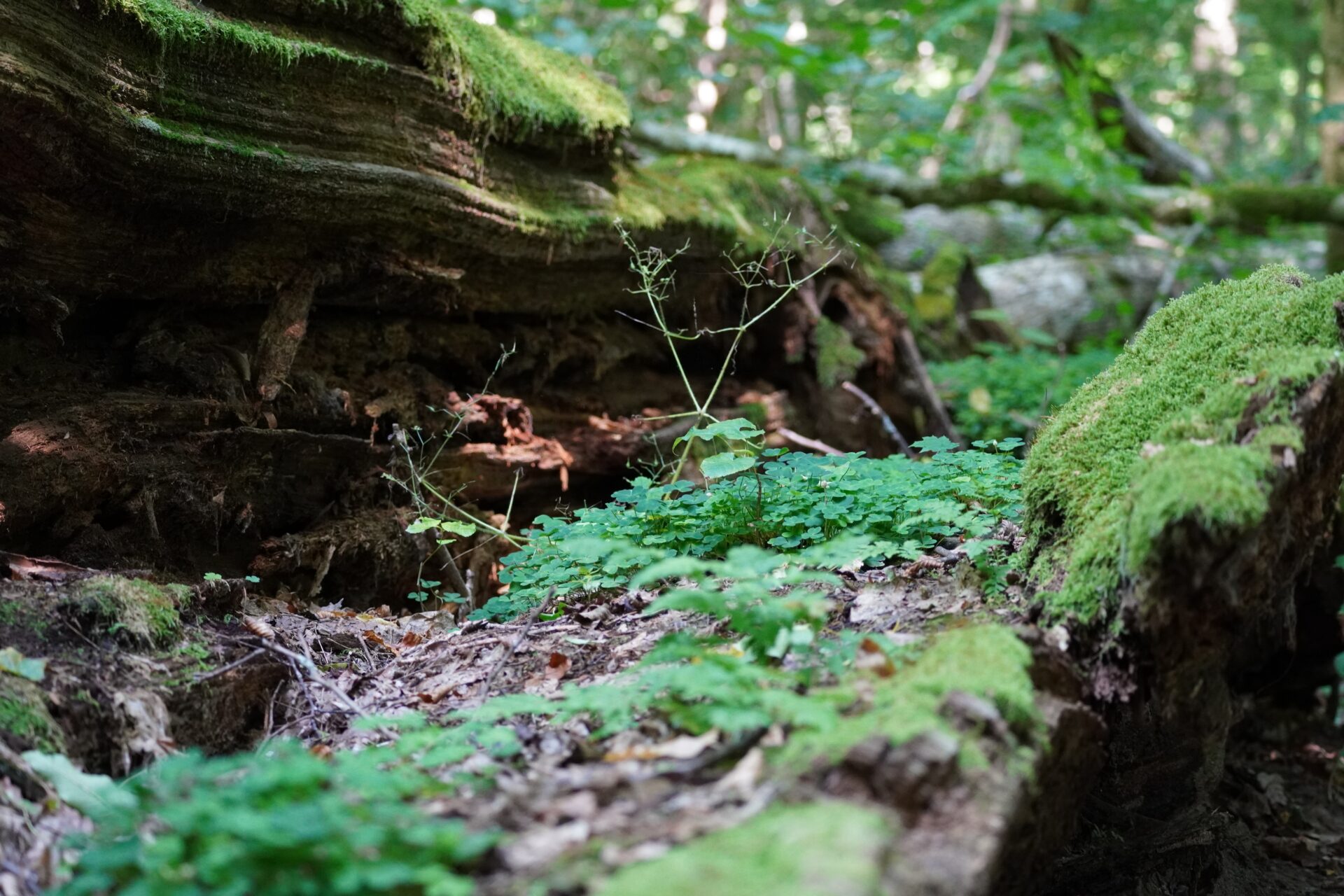
The 150,000-hectare Białowieża Forest is a beautiful piece of nature, as Teunissen observed on several visits in recent years. ‘It’s one of the oldest primeval forests in Europe. There’s dense vegetation, fallen trees, rivers and swamps. In winter it’s extremely cold, often well below freezing. It mostly looks like a big nature reserve. Until you suddenly see military trucks driving around.’
With financial and political support from the European Union, the Polish government has built up a vast border infrastructure in the forest in recent years. Teunissen: ‘First, concertina wire was laid: a kind of barbed wire with blades, designed to injure people or animals. First one coil, later three coils stacked on top of each other. Then cameras were added. The electronic surveillance system is funded by the European Union.’
The researchers behind the Death Zone report mapped exactly where in the landscape this infrastructure was placed. The border between Poland and Belarus runs partly over land and partly along a river. Initially, the infrastructure was installed only on land and not along the river – extra equipment was only added there later. Border guards the researchers spoke to said a fence wasn’t needed there. Teunissen: ‘According to them, the river does the fence’s job.’
Rivers and other parts of the landscape therefore do form part of the border infrastructure, the researchers argue. Schapendonk: ‘If people drown while crossing that river, it’s because the infrastructure was designed so that the river plays a role in it. That’s an important point when it comes to responsibility for border deaths at Europe’s external border. Natural conditions are often seen as a passive backdrop to border deaths, but this research shows they contain active elements.’
Bullets
How is it possible that an external border of the European Union is still so deadly in 2026, when European agreements stipulate that the country where a refugee enters the EU decides whether or not to grant asylum?
‘That’s a question all of us, whether academics or policymakers, have to keep asking,’ says Schapendonk. ‘If you keep repeating that question, people have to go and look for the answer themselves.’
Above all, the researchers wanted the report to show what is happening at Europe’s external borders, says Schapendonk. ‘In that sense this research is unique, because it combines detailed mapping, phone data and migrant testimonies, including conversations with border guards. Our aim is to provide insight and identify responsibilities. And of course, if you zoom out, you’d want a more equal mobility regime, in which rights are distributed more fairly across the world. But that seems further away than ever.’
‘Last summer, politicians called migrants in Ceuta not just a danger, but even a military threat’
Fear of the foreign has only grown in recent decades, Teunissen adds. ‘We often talk about “migration”, in quotation marks. Last summer, politicians called migrants in Ceuta not just a danger, but even a military threat. In connection with our research, Polish politicians spoke of “migrants being fired like bullets by Belarus”. That choice of words dehumanises people. And by continually investing in border controls rather than in legal and safe routes, or in addressing the reasons people migrate, Europe has manoeuvred itself into an uncomfortable position.’
Lithuania and Latvia
The researchers doubt whether the new EU Pact on Migration and Asylum can improve things for refugees trying to cross a European external border. Schapendonk: ‘The trend is to push reception and responsibilities further and further outwards, for example through agreements with countries such as Albania or Uganda to take in migrants who have been turned away.’
Meanwhile, many refugees are still trying to reach Europe via Belarus today, although the ever-growing border infrastructure has made it even harder and more dangerous. According to Teunissen, the migration route has therefore shifted somewhat further north, to Lithuania and Latvia.
Border research
The report The Death Zone: the making of a lethal pushback regime across the Polish-Belarusian Borderlands by the forensic research agency Border Forensics is a collaboration between the academic research projects Infrastructuring Nature and Circumference of Violence.
The Infrastructuring Nature project examines how ‘nature’ is drawn into border politics, and how nature itself shapes that politics, ultimately producing a series of inhospitable landscapes for displaced people. In this project, Joris Schapendonk and Peter Teunissen work together with Penny Koutroulikou (National Technical University of Athens).
The Circumference of Violence project focuses on the normalisation of violence at the EU’s external borders, despite the unrelenting efforts of non-governmental actors to expose it.
Joris Schapendonk is an associate professor of Human Geography at Radboud University. Peter Teunissen coordinated the Death Zone research. He studied at Radboud University and is now affiliated with the University of Bern.