Scientists critical of Radboud’s ‘in’to Languages’ AI courses; language centre emphasises the responsible use of chatbots
-
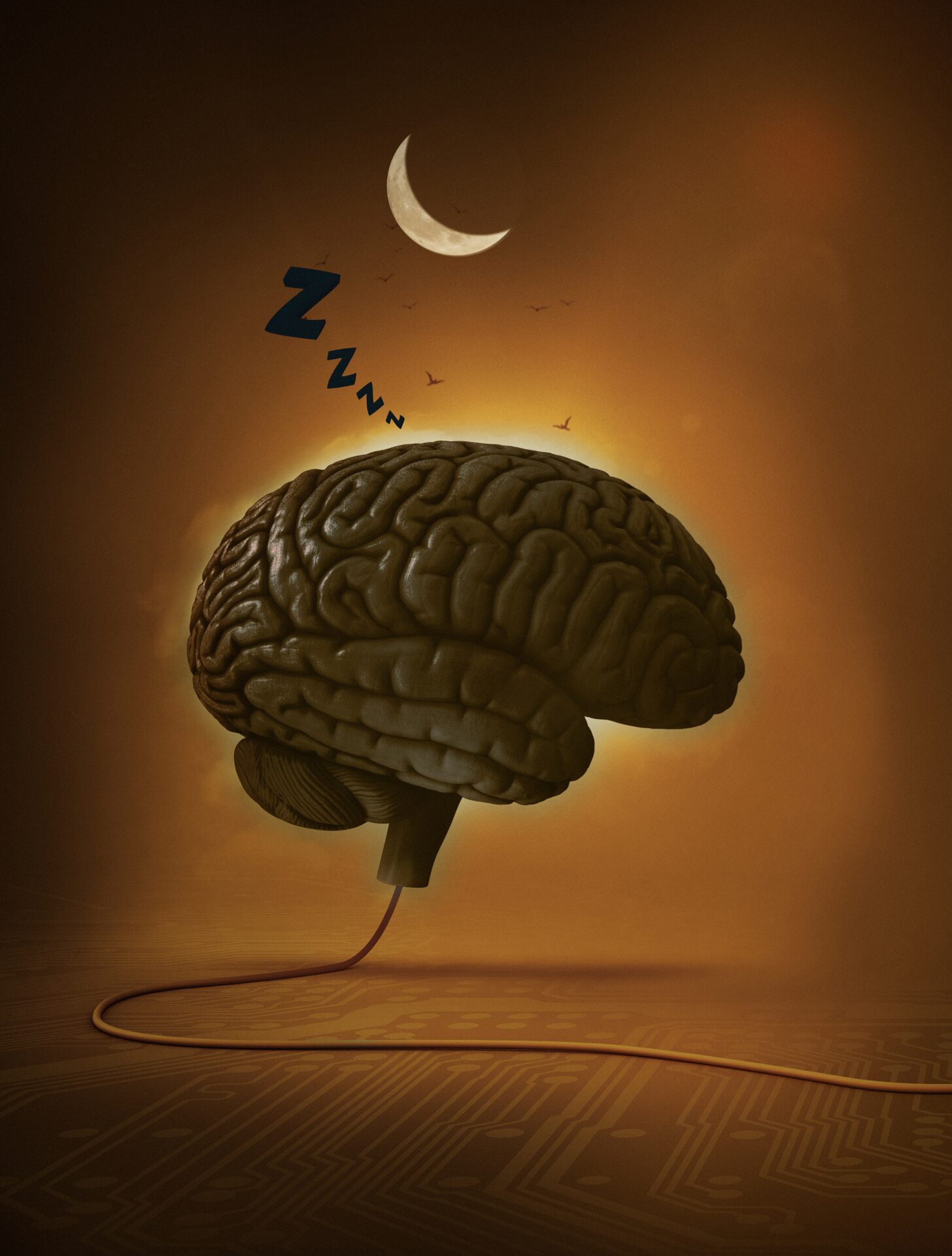
 Illustratie: JeRoen Murré
Courses offered by Radboud In’to Languages on learning to write using chatbots do not meet academic standards and undermine the work of academics, according to a professor and an associate professor of Artificial Intelligence. ‘The impression that In’to promotes AI this uncritically does not reflect our approach,’ responds the director of In’to.
“Do you regularly write texts for your work? Do you sometimes use AI tools in the process, but the results have so far never really been satisfactory? Or do you think there’s more to be gained from these tools? In this interactive workshop, you will learn how to work even smarter with GenAI, so that you not only get better results, but also save time.”
Radboud in’to Languages is using this text to recruit participants for the workshop ‘Writing Smarter with Generative AI’. In addition to this course, In’to is also organising a workshop on ‘Basic GenAI skills’. Professor of Artificial Intelligence Iris van Rooij and Associate Professor of Artificial Intelligence Olivia Guest find this highly problematic. Guest has spoken out strongly against the course on social media. A question regarding this course was also recently raised at the General Assembly from Radboud University.
Plagiarism
According to Van Rooij, the workshop suggests that using AI for writing is acceptable, smart and efficient. ‘And that is simply not true. Students or academics taking this course risk committing plagiarism. We are seeing a sharp rise in academic dishonesty amongst students using these technologies, for example because false citations are appearing in their work. The same, incidentally, applies to academic papers, which are increasingly containing false references.’
Sylvia van der Weerden, director of Radboud in’to Languages, wants to address a few misunderstandings about the course. Firstly, In’to’s AI training courses are not intended for students. ‘The courses are extracurricular and focus on the professional development of staff and external professionals,’ the director explains.
‘The goal is explicitly not to encourage uncritical use of AI’
Van der Weerden describes the advert copy as a ‘brief and compelling summary’ of the course. ‘If you read on, you’ll see that our training courses emphasise the responsible and critical use of GenAI. We explore what AI can and cannot do, when its use is appropriate, and what risks exist in terms of reliability, bias, privacy, sustainability and dependence on technology. The goal is explicitly not to encourage uncritical use of AI, but to better equip people to engage with it in a conscious, responsible and professional way.’ According to Van der Weerden, the training courses emphasise that AI output must always be critically assessed and that human oversight remains essential.
ChatGPT and CoPilot
However, the explicit mention of ChatGPT in the recruitment text is a point of contention for the academics. Van Rooij calls it an example of ‘techno-fascist ideology’. She explains that this is due to the political agenda and exploitative practices of the company behind ChatGPT, and the racist and sexist biases embedded in the language model. ‘Users of the chatbot believe that they are immune to these ideas, but research shows that all the suggestions the chatbot makes influence the user’s thinking. And I haven’t even mentioned the energy these models consume.’
‘And this at a time when we’re all – deans, directors, experts, policymakers – working hard to develop guidelines for the ethical use of AI,’ Van Rooij continues. For staff and students using AI, Radboud University currently recommends Microsoft 365 Copilot Chat, as data security is said to be a key priority in this chat service. However, Van Rooij would prefer to see the university restrict the use of this chatbot as well. ‘In times of budget cuts, the university pays a lot of money each year for that subscription, while at the same time wanting to break itself from big tech. That’s a contradiction. But that’s a different discussion.’
According to Van der Weerden, the training sessions use a variety of AI tools that are relevant from both a social and professional perspective, including ChatGPT. ‘We also clarify which tools are or are not recommended within Radboud University for specific applications, for example based on privacy or data policies. And our workshops explicitly state that Radboud University staff are only permitted to use Copilot Chat.’ The director emphasises that In’to’s guiding principle is not to promote any single tool, but to develop AI literacy. ‘Understanding how these systems work, the considerations involved, and how to use them responsibly.’
Van der Weerden: ‘Naturally, we believe it is important that our offering aligns with university guidelines and academic values such as critical thinking, transparency and the responsible use of technology.’
Experts or not?
According to Guest, the recruitment text makes it clear that In’to’s staff are not AI experts. ‘What they are experts in, for example, is delivering language courses. After all, Radboud University has a Department of Cognitive Science and Artificial Intelligence.’
‘One of the consequences of the AI hype is that everyone suddenly seems to be an expert’
It is precisely this disregard for expertise that Van Rooij identifies as a pitfall of AI. ‘One of the consequences of the AI hype is that everyone suddenly seems to be an expert, whilst genuine subject-matter experts are ignored. When I look at the text announcing this workshop, I get the impression that the uncritical approach to AI technologies has worsened in recent years.’
Writing with AI
Why is Radboud in’to Languages, Radboud University’s centre of expertise for language and communication, organising courses on writing with generative AI? ‘For many years, we have been closely monitoring technological developments in our field, drawing on our expertise in language, communication and pedagogy,’ says director Sylvia van der Weerden. She refers, among other things, to translation software, digital learning environments and online applications for language acquisition. ‘We have therefore been following developments in the field of GenAI very closely.’
‘When generative AI and Large Language Models (LLMs, ed.) became widely available, we saw that this technology was having a major impact on language, communication and writing processes. It was important for us to understand how it worked and to explore its possibilities, limitations and risks. We noticed that more and more people were starting to use GenAI tools, often without a clear understanding of their possibilities, limitations and risks. However, there was a clear need for insight into these matters. That is how our first AI training course, ‘Writing with AI’, came about.’
The tutors on the AI training courses are indeed not AI researchers and do not present themselves as such, Van der Weerden responds. ‘Their expertise lies in the fields of language, communication, teaching methodology and the professional use of language technology. They teach practical language and communication skills. Our lecturers draw their expertise from keeping staying up to date with scientific and societal developments, research and literature, lectures, conferences, training courses and professional networks.’
According to Van der Weerden, the lecturers actively seek input from scientists and professionals in the field of AI. This takes place within the so-called AI-HUB, which meets fortnightly. External AI partners are also invited to these meetings. ‘But we are open to dialogue with researchers at Radboud University and would like to engage in this even mor,’ says Van der Weerden. ‘We believe it is valuable when different perspectives, including critical ones, are part of the discussion about AI in education and the workplace.’
Balance
Van Rooij says she finds it strange that In’to, which uses the university’s logo and name, does not appear to be required to adhere to academic standards. ‘Honesty is a core value in the Dutch Code of Conduct for Scientific Integrity. Using generative AI to supposedly make a text more authentic – which is what the course aims to do – clearly conflicts with that value.’
In’to is a part of the university that has to be self-funding by organising courses, but the academics have no sympathy for this. ‘It is not the university’s role to make money,’ says Van Rooij.
Van der Weerden acknowledges that In’to’s position, ‘at the intersection of Radboud University’s internal market and the rapidly developing external market’, can sometimes cause friction. ‘We are constantly trying to strike a balance and keep an eye on both sides.’
‘Our view is that the responsible use of AI is only possible if one is aware of both its potential and its fundamental limitations’
However, the director strongly refutes the suggestion that In’to AI promotes AI uncritically. ‘Our view, on the contrary, is that the responsible use of AI is only possible if one is aware of both its potential and its fundamental limitations. We endorse the principles of critical AI literacy: a reflective approach in which opportunities and risks are constantly weighed against each other.’
Van Rooij says she actually understands a critical approach to AI quite differently. ‘I myself lead the university’s Critical AI Literacy project. That project aims to offer new scientific insights and innovative ways of thinking, based on critical perspectives from experts on AI in science and society. One of the project’s goals is to enable students, academics and professionals to develop ways of resisting AI in their daily practice.’
Van der Weerden does, however, hope that, amidst the heated and polarised debate on AI at the university, there will still be room for a substantive, professional and collegial discussion. ‘Constructive criticism has its place within an academic community, but it must be based on facts. That is why we find it regrettable when colleagues are publicly attacked via social media instead of the discussion being conducted directly and substantively. Essentially, our views do not differ greatly from one another.’
‘Our criticism is directed at In’to as an organisation, not at individuals,’ responds Van Rooij. ‘Moreover, public criticism falls within the scope of academic freedom. Especially at a time when that freedom is under pressure, it is important to safeguard it.’
To ignore it or not?
Leaving aside the In’to course, what should the role of AI be at Radboud University? Shouldn’t students instead be offered a course in AI literacy, in which they learn to engage critically with this technology? ‘The short answer is yes, but there are a few nuances,’ says Guest. ‘It is inherent in a system like AI that it wants you to become obsessed with it, whether in a positive or negative sense. We must prevent that. It would not be a good thing if all lecturers suddenly started teaching courses on the impact of AI on their subject area, whilst their other courses are far more important or interesting. Rather than teaching students to approach AI technology criitically, we should first and foremost teach them to think critically.’
But given the ubiquity of AI in the labour market, is ignoring the technology really an option? ‘You mustn’t fall into that trap,’ says Guest. ‘Because that is precisely what the hype is designed to do. That is why we believe that resistance to AI in the academic world is both possible and necessary.’
‘I hope the open letter helps to spark a discussion about what universities do and whom they represent’
In June 2025, Olivia Guest wrote an open letter on this subject, which was signed more than 1,800 times. She also sent the letter to the Executive Board of Radboud University, but has not received a reply to date.
Guest: ‘I hope the letter helps to spark a discussion about what universities do and whom they represent: the interests of companies, or those of students and staff who say they do not want AI? Of course, one university taking a critical stance on AI is not going to change the world. But perhaps it will help to nudge things a little bit in the right direction, and that is all we can hope to achieve.’
Fraud and plagiarism
The consequences of widespread AI use at university are now becoming apparent. According to Olivia Guest, the figures for the number of students failing their courses as a result of AI-related fraud are very high. ‘For some courses, it’s almost 50 per cent,’ she says. ‘This leads to an extra workload for lecturers, who, incidentally, do not enjoy failing students. But it is simply our legal duty not to award degrees based on plagiarism.’
Iris van Rooij has also noticed this increase in workload for academic staff. ‘At the very same time as we’re trying to teach students academic skills, such as reading, writing, programming and critical thinking in general. You only learn those kinds of skills through lots of practice. But if you outsource them to AI, you’ll never master them yourself.’