Summer Interview (1) with Spinoza Prize winner Karin Roelofs: How a tiny mouse sparked a major study on stress
-
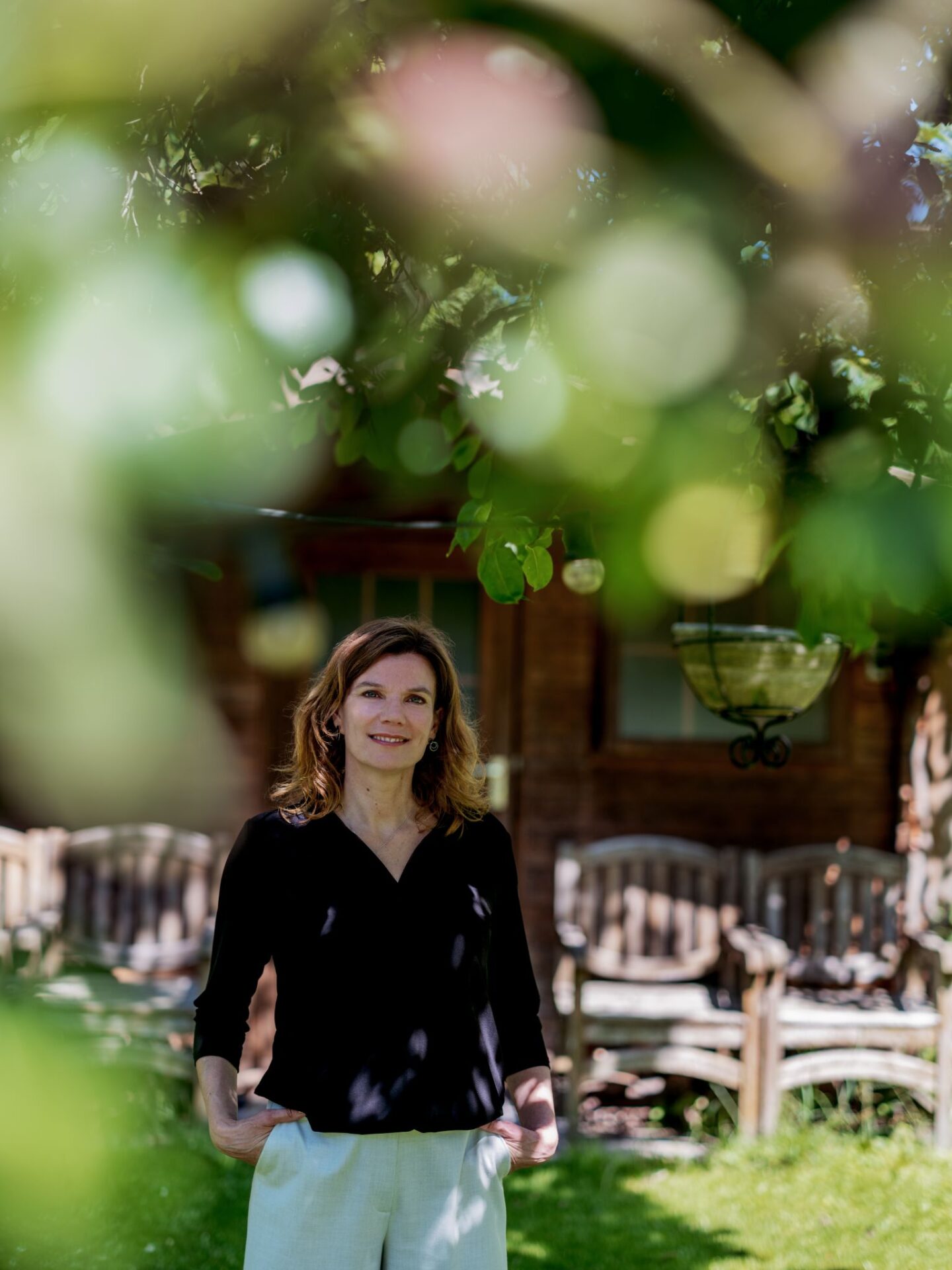
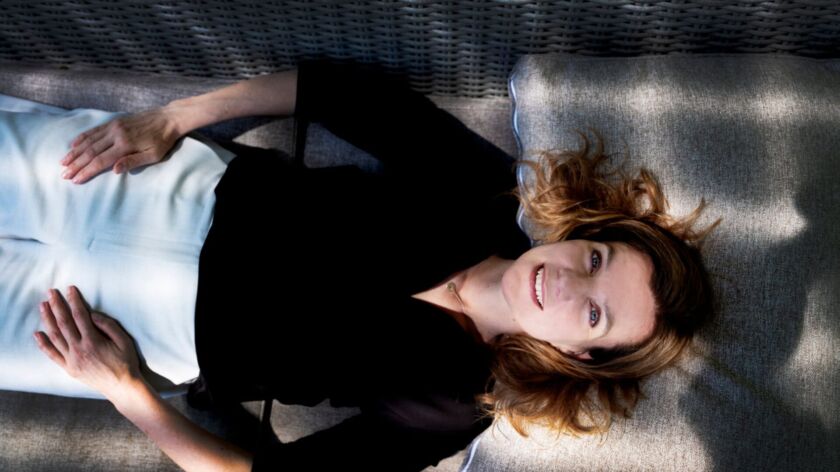 Karin Roelofs won de Spinozapremie. Foto: Duncan de Fey
She once turned down an offer to become a professor. Instead, neuroscientist Karin Roelofs spent ten weeks cycling through Asia with her family. Four years later, she finally said yes. Last week, she received the prestigious Spinoza Prize for her research into stress responses. What if her research could help free PTSD patients from their anxiety?
It was summer, and there was a mouse in the garden. Karin Roelofs (54) wondered if the little creature was dead. It sat so incredibly still. The cat, which had been playing with the mouse earlier, was also keeping a close eye on its prey. In a split second, just as the cat turned its head, the mouse dashed out of the corner and sprinted toward freedom. ‘That was incredibly smart!’ says the neuroscientist. The little animal had been hyper-alert the entire time, waiting for the exact moment the cat’s attention slipped to spring into action and save its own life.
Biography
Name: Karin Roelofs
Born in: Venlo (1972)
Education: Clinical psychology and neuropsychology (Radboud University), healthcare psychologist (GZ) registration
Employed at: Donders Institute and Behavioural Science Institute
Other roles: Board member ERC, member of the KNAW (Royal Netherlands Academy of Arts and Sciences)
Grants: Including Veni, Vidi, and Vici from NWO; Spinoza Prize; ERC Starting Grant, ERC Advanced Grant, Horizon2020 Personalized Medicine grant
Springing into action
What the researcher in Roelofs wondered—years ago now—was whether humans can also make such wise decisions when they are in a similar ‘freeze’ state. Up until then, the freeze response, a state in which someone temporarily freezes when danger looms, had a bad reputation. The prevailing thought was that it was better to take action than to stand by paralyzed as an aggressive person approached you.
‘I asked myself whether there might be a kind of ideal situation where this sharp focus was optimal,’ Roelofs says at the patio table in the very same garden where the clever mouse saved its skin. ‘Can we perceive things better if we bring our body into a certain state? I was also working as a healthcare psychologist and knew that patients can sometimes remain in a freeze state for too long. We call that tonic immobility; it can happen during a rape, for example.’
‘Can we perceive things better if we bring our body into a certain state?’
‘It is a temporary paralysis over which you have no control, which is truly different from a normal freeze. You usually detach from your body a bit; you aren’t fully present. I wondered if there was a sort of optimum, a state in which we make the best decisions under pressure.’
The ordinary house-and-garden mouse thus became the starting point for her research, which would ultimately lead to the Spinoza Prize that Roelofs received last week. ‘An enormous honor,’ she calls the 1.5 million euro distinction.
Marcel Lévi
On Ascension Day, she was called by an unknown number. She noticed on her screen that the caller had tried several times before. When she finally picked up, it was Marcel Lévi, the director of NWO (Dutch Research Council). ‘I remember thinking: oh nice, so he can make it to my symposium after all. I had invited him to sit on a panel, but he had let me know he couldn’t come.’ But Marcel Lévi wasn’t calling about the symposium. He was calling to congratulate Roelofs, who is affiliated with both the Donders Institute and the Behavioural Science Institute, on winning the most prestigious science prize in the Netherlands.
‘After that, I really needed a moment to process it,’ she admits. ‘There was also a sense of modesty. Like: why me? This prize truly belongs to my entire team. But above all, I thought it was incredibly cool. It is an insanely huge honor for my field, cognitive neuroscience.’
The NWO Spinoza Prize exists to further celebrate and support fundamental research. And that is exactly how it started for Roelofs. It was her curiosity that sparked the idea to investigate whether humans share the same stress responses as animals, and whether evidence of this could be found in the brain and the rest of the body.
‘This is a study that has been running for a very long time and was built up very slowly.’
‘This is a study that has been running for a very long time and was built up very slowly. Now we know that freezing, and the entire psychophysiological state you enter during it, is actually highly beneficial for decision-making under certain conditions. We are even training people to consciously bring their bodies into that state.’ As is often the case, the fundamental research eventually blossomed into applied science. Police officers in training have recently begun receiving practical training using VR goggles, grounded in the principles of Roelofs’ insights (more on that later).
Police Officers
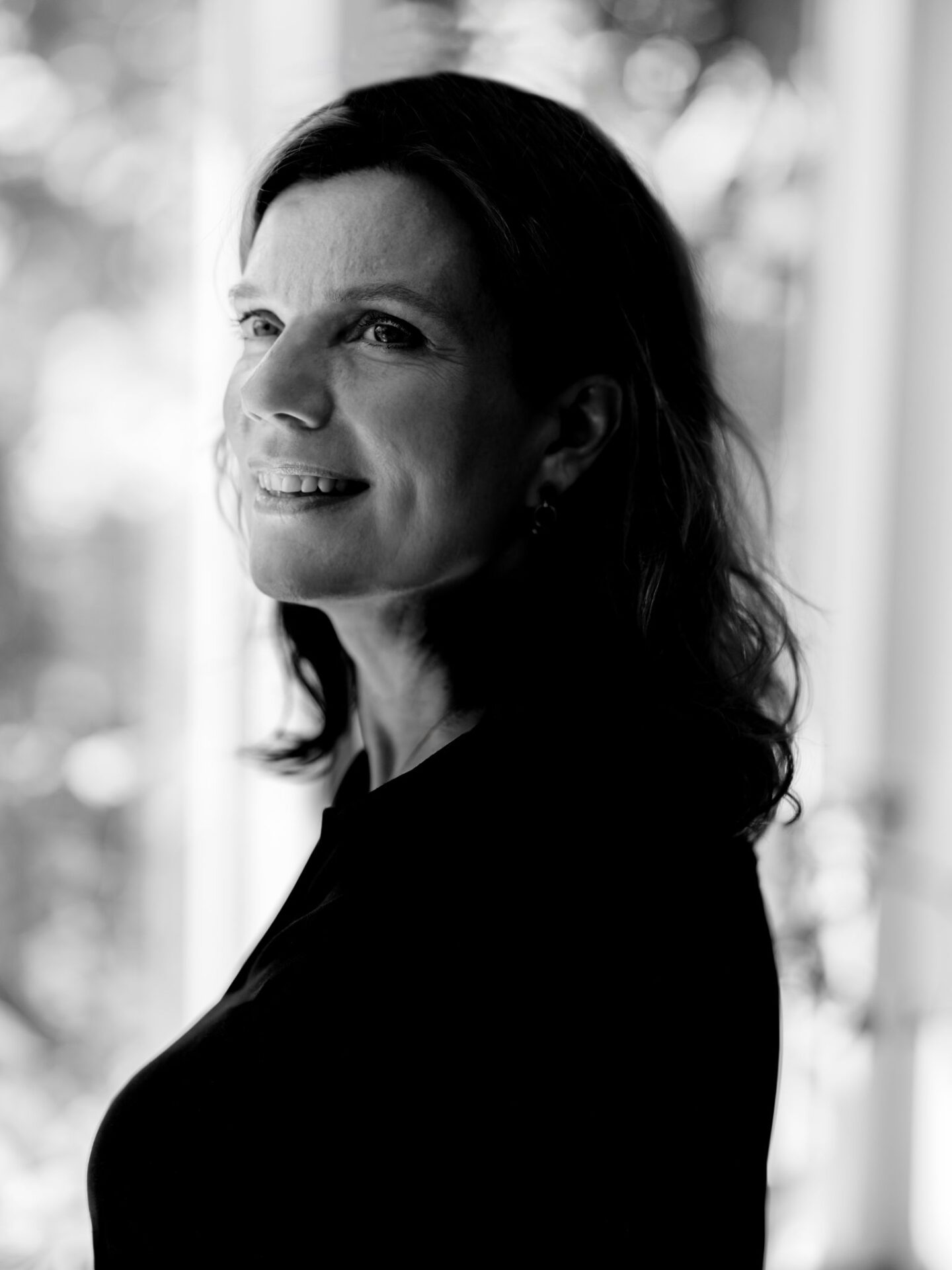
The professor, originally from Venlo, walks barefoot through her house in Nijmegen-Oost. She slices strawberries she has just picked. She asks if her guest would also like a bowl of yogurt with fruit. And coffee? Or tea? She apologizes for the cat hair on the garden cushions.
She moved here in 2010 with her husband and two children, returning to the city where she studied psychology in the early 1990s. The house they bought is twelve hundred meters away from the Donders Institute, the research center where she has placed hundreds of people into MRI scanners to study their brain activity. What makes her a pioneer (according to the Spinoza Prize laudation) is that she linked what happens in the brain to physical reactions.
What are those reactions?
‘Under acute threat, we see people’s heart rates skyrocket, their pupils dilate, and they begin to sweat. In this fight-or-flight state, muscle tension increases as people brace themselves to take action. You could say their body is slamming down on the gas pedal. This happens, for instance, if you suddenly see someone stepping out into the street as a car approaches.’
‘Should you run after them or not? How do you do that without getting hit yourself? You have to make that assessment. A freeze response can enormously help in making more accurate decisions. In that moment, you are essentially hitting the brakes at the same time. You bring your heart rate down while still being completely ready to go. As a result, your perception becomes sharper.’
Your research shows that police officers who can hit the brake pedal while the gas pedal is fully pressed can make accurate decisions faster under stress.
‘Yes. And people who can hit the brakes at such a stressful moment also have a lower chance of developing trauma-related complaints in the long run. That is a wonderful secondary finding. We saw something similar by studying very young children. Toddlers of fifteen months who freeze when a complete stranger or a noisy robot suddenly walks into the room develop fewer depression and anxiety symptoms later in life than children who show no freeze response at all. That was remarkable because we hadn’t initially expected that.’
‘Back then, we were still of the mindset that freezing is bad because you aren’t doing anything. By now, we know that your brain is actually incredibly active. You aren’t moving for a moment, but you can perceive things better, and your brain is working hard to calculate what to do. Freezing is an active response.’
Youth from Halt
Since a low and variable heart rate—like during a freeze—apparently works so well, the police asked Roelofs how they could train their officers to achieve it. ‘Yoga exercises or mindfulness can help lower the heart rate and make it nicely variable through breathing, but that turns out to no longer work when a police officer is facing an angry demonstrant in the heart of Amsterdam and has to make decisions under acute stress.’
‘We developed a VR environment where officers must constantly make choices under high pressure. Their heart rate is measured while playing the game. If it becomes too high and rigid, their vision goes completely dark. If they manage to lower it and make it variable, for instance by breathing deeper and slower, it brightens up again, and the game becomes easier to play. This training has proven highly effective and is now being used in police training.’
The next step is to allow other target groups to benefit from this knowledge, Roelofs notes. Think of people with anxiety disorders who see danger constantly and everywhere, or youth who tend to react aggressively under the influence of stress.
‘Together with the Halt bureau (the Dutch juvenile alternative sanctions agency), we are looking into whether we can train youth serving alternative sanctions. They often deeply regret something they have done. Can we teach them to apply a form of self-regulation so that next time they find themselves in a stressful situation, they can check in with themselves first to see what the best reaction would be? And whether it’s actually smart to attack that police officer right now? Such training is a form of prevention.
A true researcher
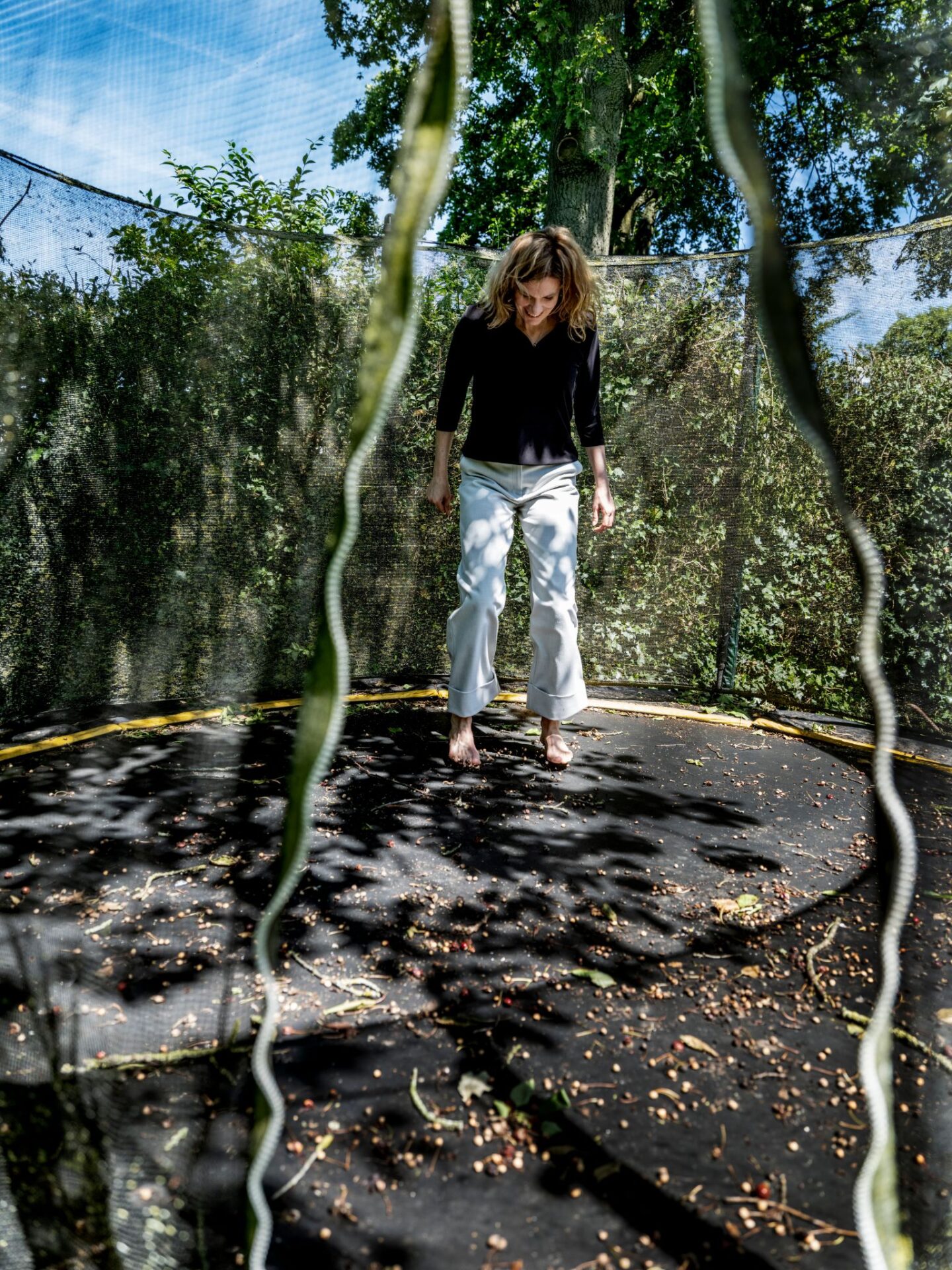
When she was young, she already knew she wanted to do something with brains and emotions later in life. Her father was a physics teacher and took her to his physics lab from an early age. He had an empirical nature: measure, measure, and measure some more. Her mother, a graduate of the social academy, went on to study theology later in life and was more philosophical by nature. Roelofs has three brothers and a sister.
‘There was certainly plenty of debating at our house, yes, though not everyone enjoyed it equally. It was mostly my sister and me who loved it. She went into academia too; she is a philosopher.’
Roelofs earned her degree as a clinical psychologist in Nijmegen. For her thesis research in neuropsychology, she went to the National Institutes of Health (NIH) in Bethesda, the mecca for researchers. There she encountered MRI, and the technology fascinated her.
During her PhD research, she also obtained her healthcare psychologist (GZ) registration so she could treat clients herself. She worked at Leiden University for eleven years. When the youngest of her two children was not yet a year old, she was asked to become a professor at Radboud University. She weighed her options but politely declined.
Why did you say no to such a beautiful offer?
‘I just wasn’t ready for it. The children were still so small. My husband was completely on board; he already had his eye on a beautiful house in Nijmegen. We were still living in Leiden at the time, and he really wanted to leave the Randstad area. It was an incredibly difficult decision, but I turned the offer down anyway. I had never seen myself as a professor; in my mind, I was a true researcher. I loved that work, and I was a bit afraid of working eighty hours a week and having time for nothing else.’
Did you regret your refusal later?
‘Absolutely not. I learned a lot from it. How important it is to stay true to yourself and not just chase after everything. That’s something I always try to tell my students: do things when you are ready for them. Dare to truly immerse yourself in something for a while. Instead of becoming a professor, I went cycling through Asia with my family for ten weeks. The two small children were in a trailer behind the bike. That trip cleared a lot of space in my head. Maybe, I thought, I’m just not cut out for this career.’
‘I learned how important it is to stay true to yourself and not just chase after everything’
In the hallway, she points to a framed photo of a young Karin and her husband. Their hands rest on their bicycle saddles against an Indonesian street scene, their faces tanned. She shares how amazing the cycling trip was. Had she become a professor straight away, she would have missed out on all those experiences.
Four years later, the psychology department at Radboud University reached out again: was Roelofs ready now? Yes, said the future professor. And her husband could once again browse Funda (a housing website), daydreaming about houses with gardens in leafy Nijmegen.
Stimulating brain nuclei
She will use the Spinoza Prize to advance the newest branch of her research: direct stimulation of deep brain nuclei. As humans, we can train ourselves to a certain extent to control our breathing and heart rate, but there are patients for whom this isn’t enough to rid them of unregulated anxiety responses. A few patients have been described in literature whose anxiety was so severe that they underwent surgery to electrically stimulate the amygdala.
‘This worked well for those individuals, but it is highly invasive. What we are working on now is non-invasive stimulation of the amygdala using ultrasound—essentially delivering tiny pulses to brain cells via small speakers. In the lab, we have already succeeded in using this to disrupt the learning of fear and, conversely, to make unlearning fear easier. When I fantasize about the future, I hope we can one day use this to help people in clinical practice.’
As an example, she points to people with PTSD (post-traumatic stress disorder). What if, during a therapy session, you could activate their memory full of painful recollections and stimulate the amygdala with ultrasound at that exact moment? Perhaps it would then be possible to remove or diminish the deep fear that accompanies remembering the traumatic experience.
‘With the latest ERC grant I secured (an Advanced Grant of 2.5 million in 2025), I am already building the foundation for this research. But it is truly massive, highly innovative, and very expensive. So I think it’s fantastic that I can now truly shape this using the Spinoza Prize.’
As a scientist, you have already received many grants. A critique often heard in academic circles is: stop stacking grants and distribute the money better. What is your take on that?
‘I am very torn on that. On one hand, I believe I have put the money to very good use and that your research can yield much more if you invest heavily in it. On the other hand, I am a big proponent of awarding more small grants to young researchers so they get more career opportunities. As a board member of the European Research Council, I advocate strongly for this. The outflow of young talent is one of the greatest threats to science.’
Roelofs herself is so captivated by her research that during her sabbatical earlier this year, she traveled to South Africa to conduct a unique study on a group of people who have an abnormal amygdala due to a genetic defect. We could write an entirely separate article about how she and her students transformed a holiday home into a lab, and how she herself was scared to death when their car broke down in a neighborhood where tourists are routinely targeted. Perhaps that story will come one day. For now, we will leave it with the tale that began with a mouse and ended with the presentation of the most important scientific prize in the Netherlands.
Our other Summer Interviews:
2. Communication scientist Rebecca de Leeuw on resilience and her son, who was born deaf
4. Wheelchair basketball star Bo Kramer (27): ‘As an elite athlete, you have to love pushing yourself to the limit’
5. Sander Leeuwenburgh, the dentistry professor turning full-time pianist
6. Hans de Kroon, the ecologist who explained why you no longer need to clean bugs off your windshield (because there are hardly any left)
7. Professor Paul van der Velde: ‘People often think I’m a Buddhist’