Summer interview (5): Sander Leeuwenburgh, the dentistry professor turning full-time pianist
-
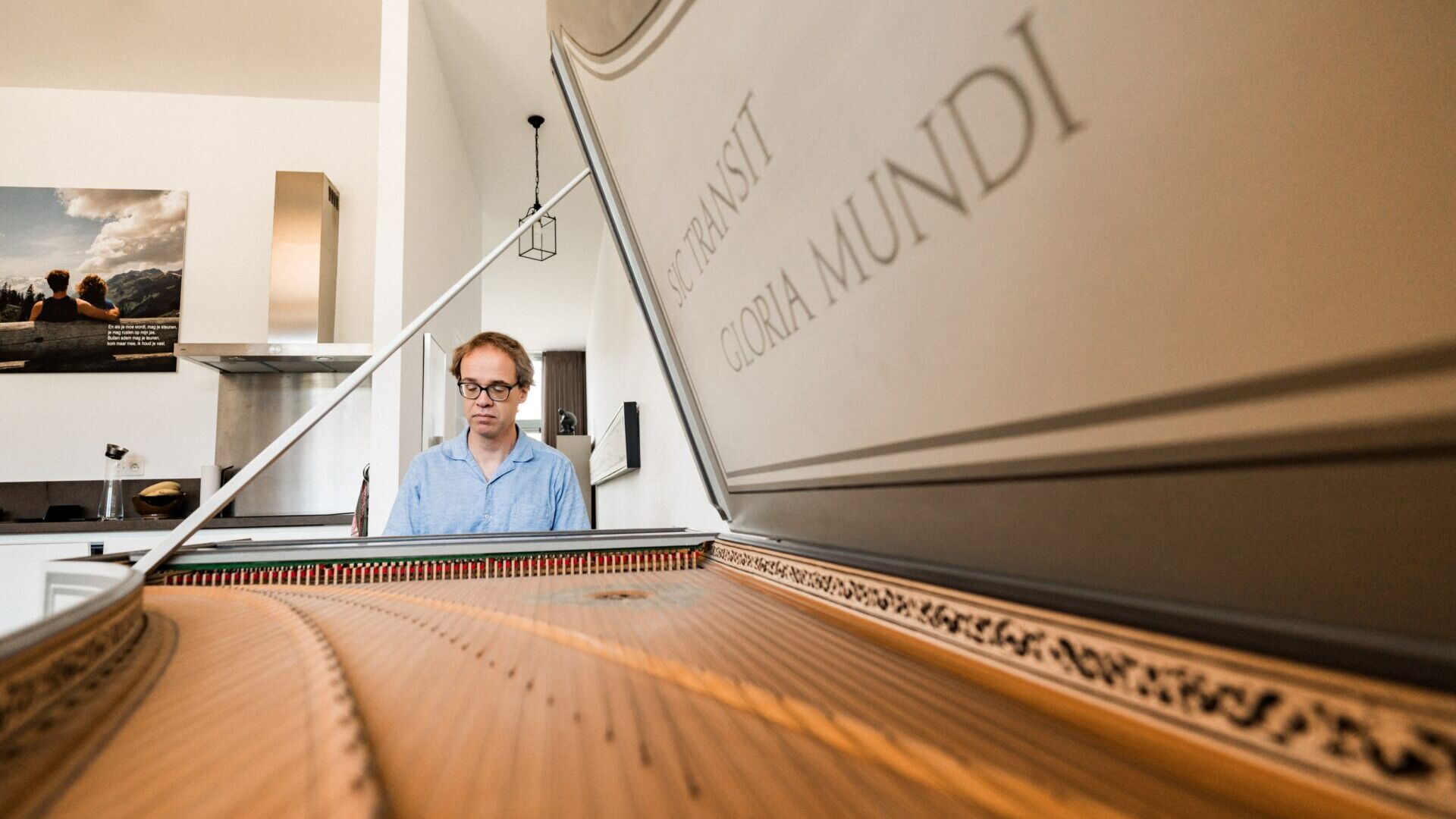 Sander Leeuwenburgh achter zijn klavecimbel. Foto: Johannes Fiebig
What does music mean to him? 'For me it comes close to the essence of life,' says Sander Leeuwenburgh. The professor of Regenerative Biomaterials is giving up science to become a professional pianist. In his kitchen stands the harpsichord he learned to play as an eight-year-old.
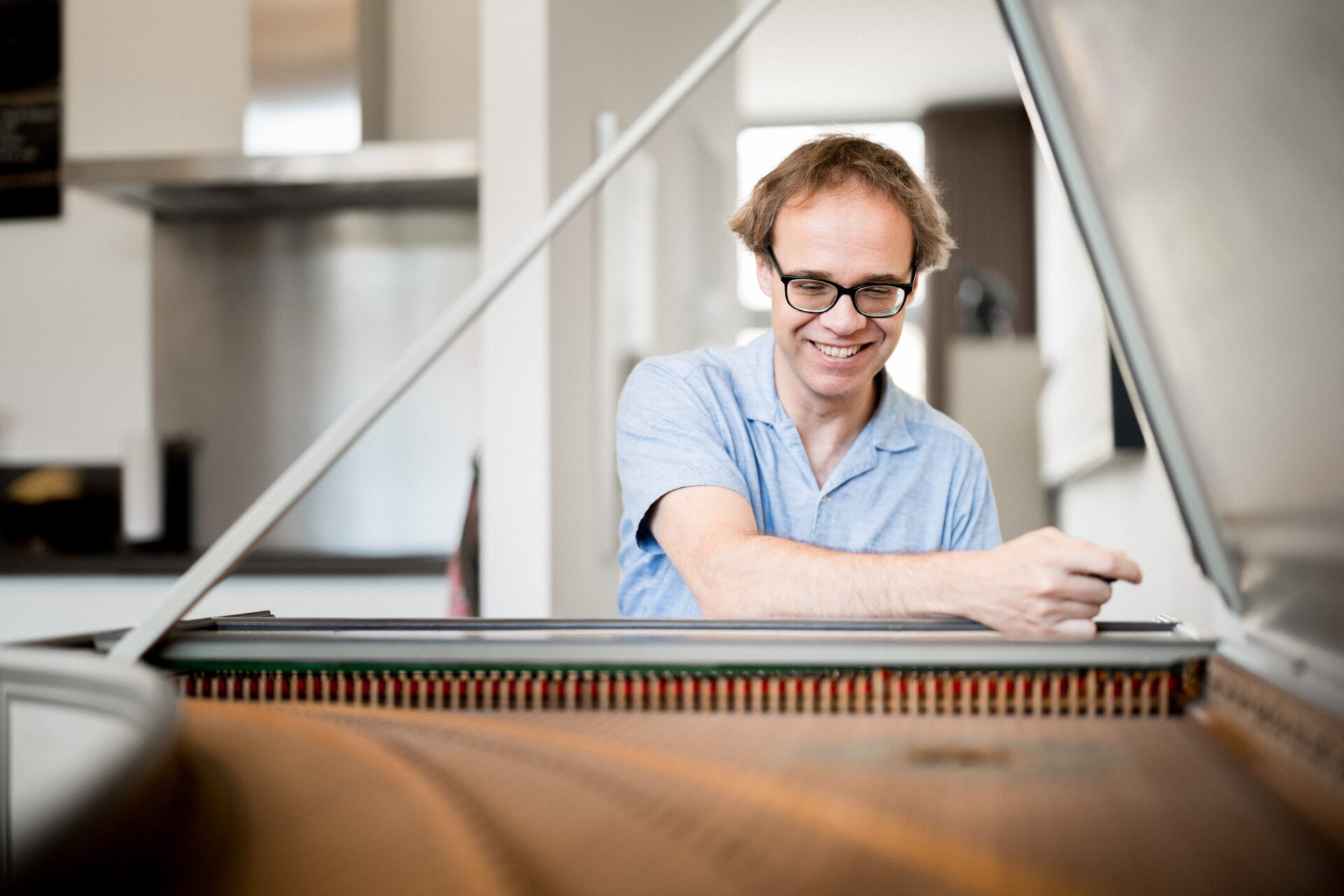
The harpsichord stands in the kitchen, between the worktop and the dining table. The acoustics in this room are actually ideal, Sander Leeuwenburgh (48) explains. ‘It’s the four-metre-high ceiling.’ His finger points upward.
As a boy of eight he learned to play on this instrument; it stood in his parents’ home. When his father asked whether Sander could give the harpsichord a home in his new-build house in Ede, he thought he wouldn’t have the room for it. Until one evening, standing on the building site, he looked in through the newly fitted windows and thought: ‘Hey — but in that kitchen…’
Something was brewing beneath the surface
At that point the idea of becoming a full-time musician had not yet been born. Leeuwenburgh had a job as professor of Regenerative Biomaterials at Radboud University; he taught and worked in the lab on developing synthetic bone, used among other things for jaw implants. His scientific career was going pretty well.
But beneath the surface, something had begun to stir. Without that ‘something’ having a clear starting point, he explains as he makes coffee. ‘It was a process. I’d always felt that one day I wanted to do something with music, but it was never more concrete than that.’
‘It was deeply emotional. I simply felt… This is my childhood!’
The harpsichord in the kitchen probably played an important part in that process. He looks lovingly from the coffee pot to the instrument, and describes what happened when, after all those years, he pulled up the piano stool again and started to play.
‘It was deeply emotional. I simply felt… This is my childhood! This is how I discovered my love of music.’
It felt like coming out — that’s how he puts it.
Biography
Name: Sander Leeuwenburgh
Born in: Gouda (1977)
Education: materials science (Delft University of Technology) and classical piano (Arnhem Conservatory)
Works at: Radboudumc (Department of Dentistry)
Also: pianist and harpsichordist
Grants: including NWO’s Veni, Vidi and Vici, and grants from the RVO Self-healing Materials programme
Coming out… that sounds pretty heavy.
‘My wife thought it was a bit over the top too [laughs], but for me that’s how it was. I felt very strongly: making music is what I really want. I was desperate to give in to it. But it carried a weight, a sense of: this is allowed, and this is not.’
Who says it wouldn’t be allowed or possible?
‘As for “allowed” — mainly myself. I didn’t know any examples of other people who’d made such a switch. Look, if things had been going really badly for me in science, the choice might have been easier. But on the whole everything was going well. I was pulling in grants nicely and running a team perfectly well. Why would you then start asking yourself whether this is the right path?
The “possible” comes more from society. The moment you say you want to do something with music, people ask: “There’s no money in that, is there?”‘
And what do you say to that?
‘That I’m going to give it a try — because that’s how it is. I’m going into it the same way I went into science, though it’s admittedly a bit easier to earn your keep there. But so I’m giving it a go, and then we’ll see what gets off the ground.’
No big mortgage
The advantage, says Sander Leeuwenburgh, is that he doesn’t have a big mortgage hanging round his neck like a millstone. He and his wife deliberately chose an affordable home to make room for other life choices. They sold the car a couple of years ago, on sustainability grounds.
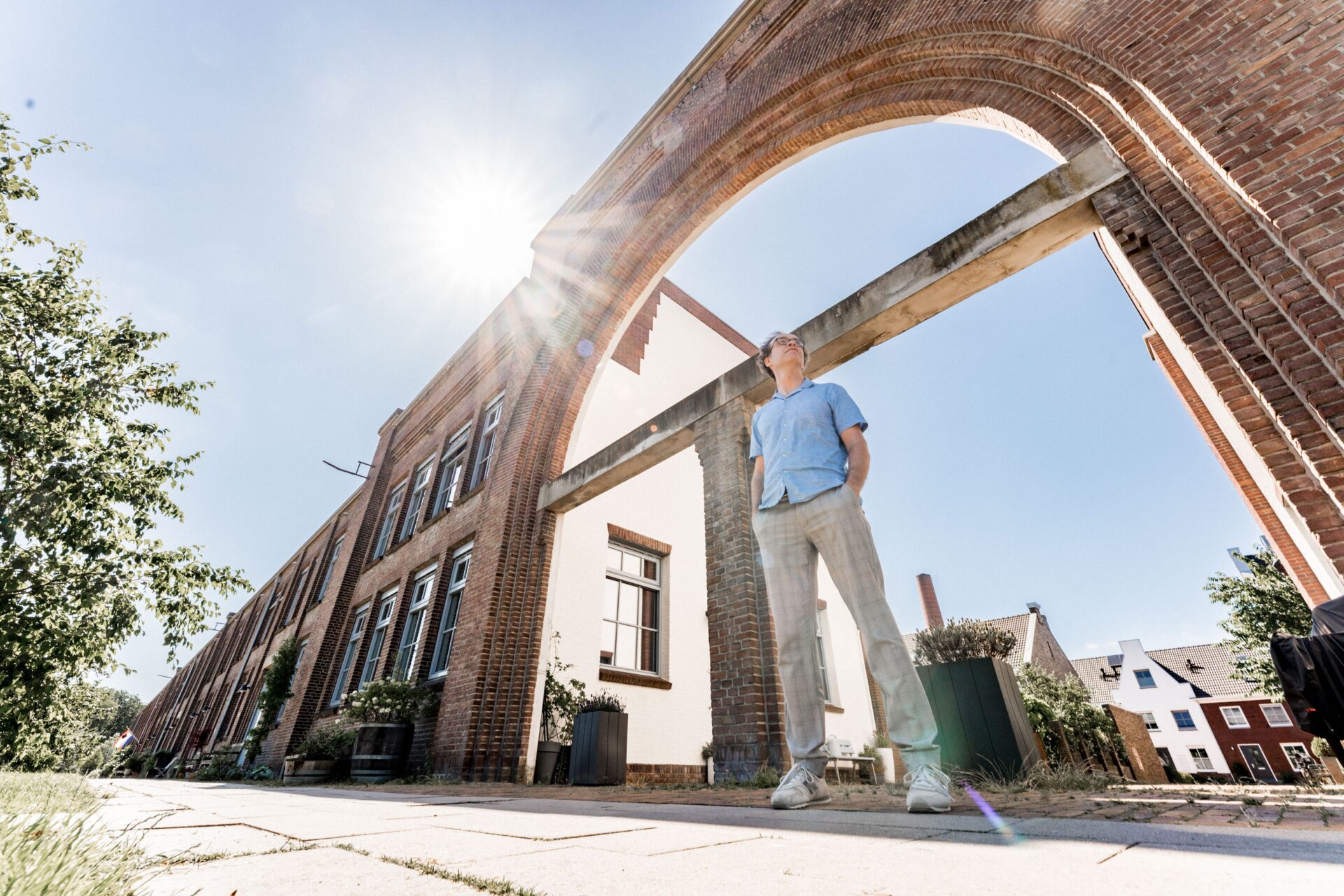
The terraced house stands almost opposite Ede-Wageningen station, in a district where an artificial-silk factory once stood. The front façade is listed and original — it was kept standing while new walls were built behind it. Hence the high ceilings.
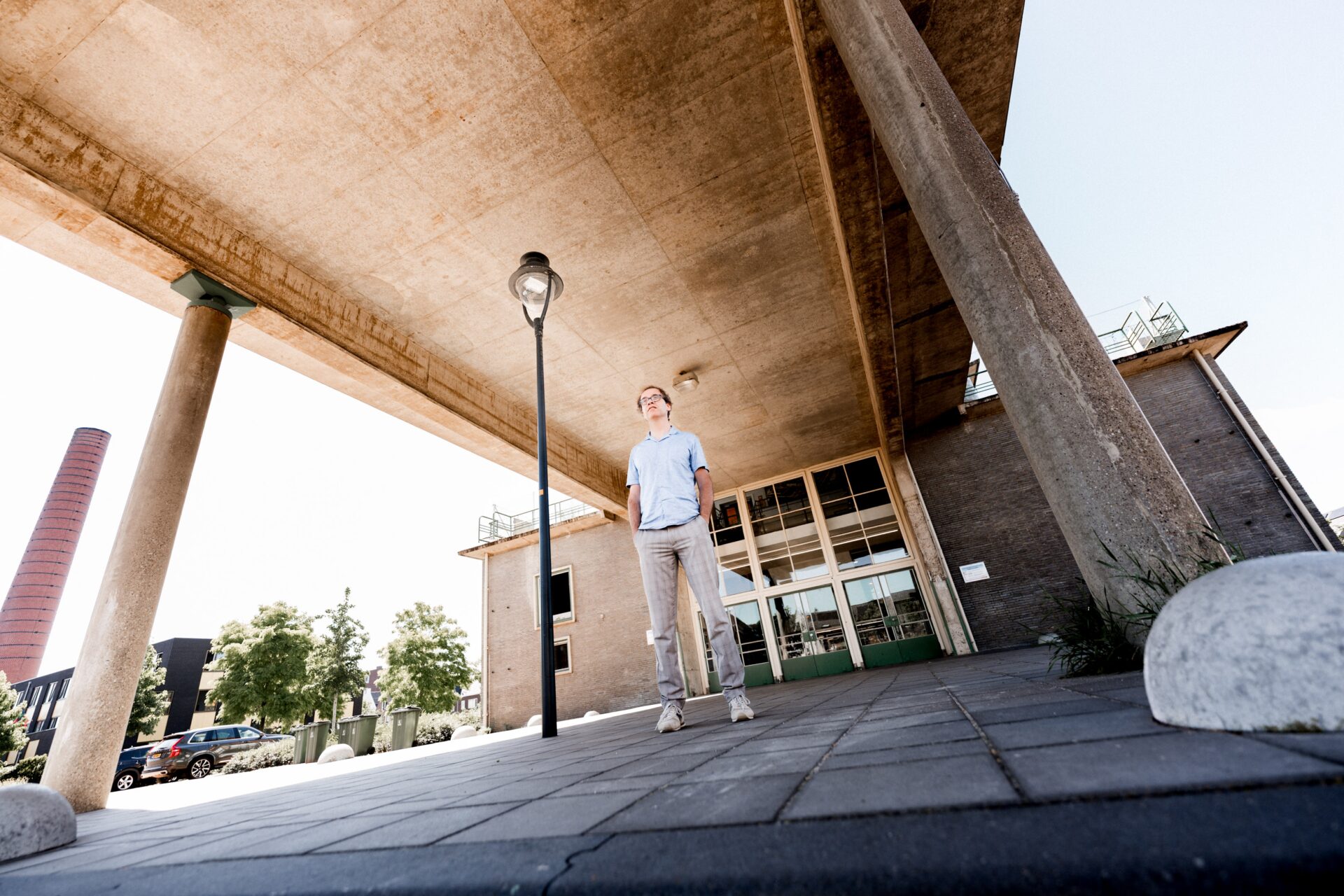
In 2024 Leeuwenburgh dared to take the plunge. He told his boss he wanted to stop being a professor, but not straight away. His proposal was to wind down gradually, to make the landing in music as soft as possible. He also didn’t want to leave his team in the lurch by walking out headlong. ‘I still work two days a week at Dentistry, and after I step down as professor I’ll stay on one day a week to help the department with things like supervising graduation theses.’
Twenty years ago he earned his doctorate in Nijmegen, after training in materials science at Delft University of Technology. During his PhD he also graduated from the conservatory.
Wasn’t that an exhausting combination?
‘For me it felt like sheer necessity. After all those years at TU Delft I’d become unbalanced. My whole life is a kind of quest for the balance between reason and feeling. I’d neglected the feeling side by being wrapped up in nothing but science. At the conservatory in Arnhem I started studying piano — that really was the time of my life.’
‘At the conservatory in Arnhem I started studying piano — that really was the time of my life’
‘I lived in a student-housing complex near the Goffertpark, and in my room stood the grand piano I still have today. There was barely space for a bed. At one point I heard someone by the bike shed humming a tune from a piece I’d been rehearsing for ages. Blimey, I thought, that lad lives four floors above me. So apparently you could hear it that clearly. Looking back, it’s absurd that I never got a single complaint about it.’
How did the piano help you get through your PhD?
‘Whenever I got stuck writing my thesis, I’d go and play a piece. It kept me mentally healthy. It put things in perspective. I always advise my own PhD students too: take up something on the side, something completely different.’
Wasn’t continuing the combination of music and a professorship an option?
‘If it were possible, I’d do it. But being a professor isn’t a nine-to-five job. It keeps you occupied all the time. When I was doing my PhD, I was only responsible for my own process — back then it still worked. Now I’m responsible for a whole crew. Say I’ve got a concert scheduled and the day before some HR issue suddenly pops up. That really doesn’t work; it would get in the way of my musical preparation.
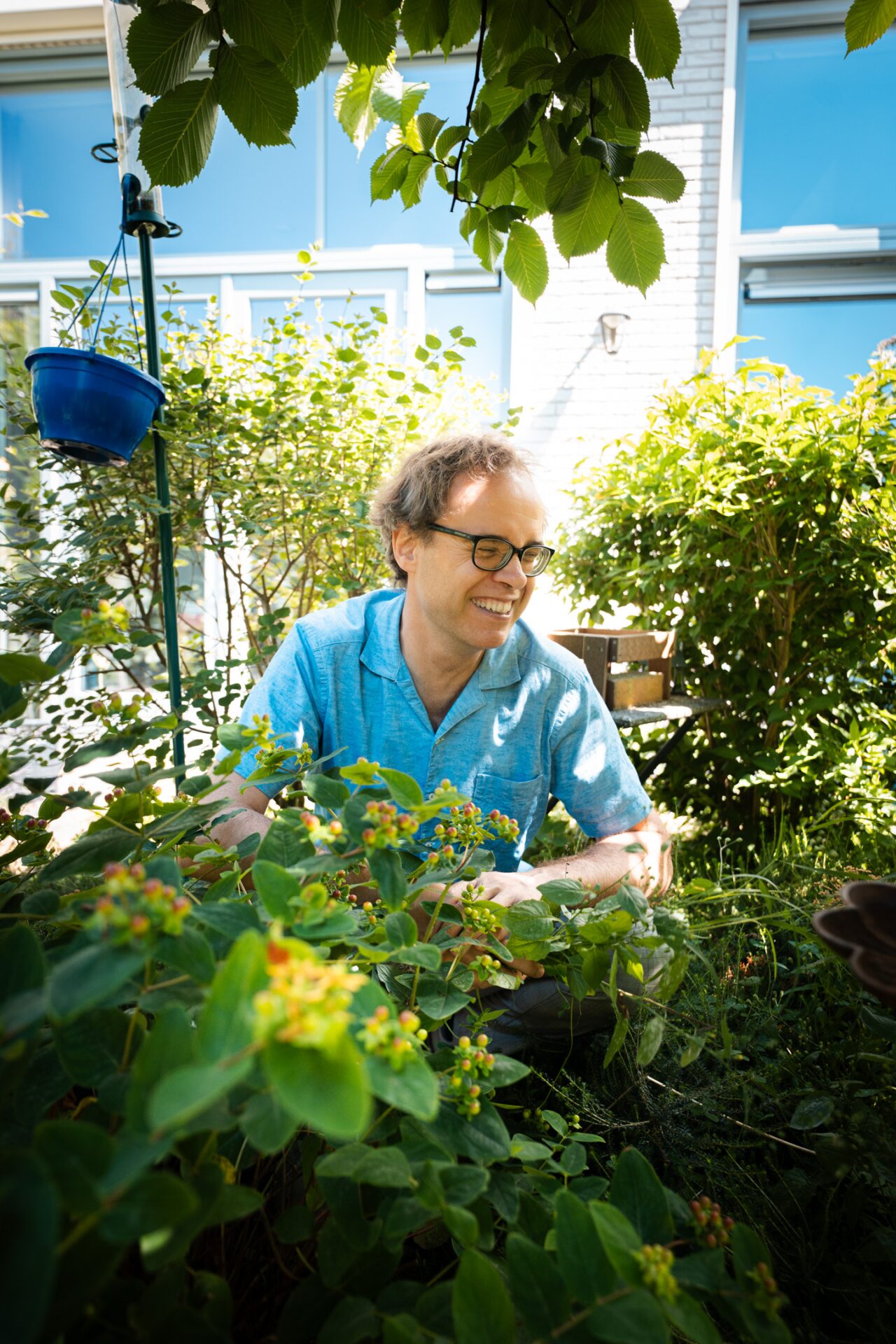
Towards my PhD students it would feel wrong too — I wouldn’t want a supervisor whose head is really somewhere else either. In the decade I’ve been a professor, there were years when I didn’t play the piano at all. As I got older and realised I was going to die one day, I thought: now it’s time to make choices.’
What does music mean to you?
‘I can’t give a very concrete answer to that… I just feel… it sits very deep in me.’
Deeper than science?
‘Yes.’
How does that feel, then?
‘Music really comes from my core; for me it comes close to the essence of life. It has something… timeless. Music has survived the centuries. Last weekend I gave a concert in the sweet little church of Velp. Afterwards people were moved, and so was I. That’s never once happened to me with science.’
His own performances
Concerts are new to the professor. As a young conservatory student he occasionally played for an audience, but not after that. The preparations for his own performances are therefore quite nerve-racking. For the Velp concert he’d spent eighteen months preparing: finding the right violinist and cellist to perform with, making his own arrangements of various pieces by Bach, his favourite composer. And then rehearsing and hoping it would work.
‘The concert really went very well,’ he sighs, with a satisfied look. That was far from a given, because the performance fell on one of the hottest days of the year, Saturday 27 June (the temperature climbed to 38 degrees). Almost every event in the country was cancelled. In the week beforehand he was in daily contact with the people from the church; luckily, on the morning itself, they got the go-ahead.
‘The lovely thing about playing with professional musicians is that they’re so terribly professional. Wanting to be as good as possible is still the norm in music. That top-athlete quality, striving for the maximum achievable — I find that inspiring. Everyone’s pacing back and forth across the stage right up to the last moment. The violinist asked whether there was a rug. There was; we laid it down and the sound was immediately much better. Ten minutes before the start, the violinist and cellist even swapped places — and then it sounded absolutely perfect in that little church.’
How do people know there’s a concert on? Do you do the PR yourself too?
‘Yes, it’s all new to me. I’ve never done things like this before. We also gave this same Bach concert in Amsterdam, where I stood handing out flyers in person. That wasn’t a success, by the way. I’d asked ChatGPT which spots I should stand in and mapped out a route that way. It was complete nonsense.
I never used to do anything with social media, but I’ve gone on there now too. It’s still a way, as a musician, to show that you’re out there. On YouTube I let people hear what I play.
What does a professor of Regenerative Biomaterials do?
With his team, Sander Leeuwenburgh develops biomaterials — ‘smart’ materials that replace bone. Among other things, he works on designing injectable, self-healing biomaterials that stimulate the body itself to repair damaged or lost tissue. Leeuwenburgh is a researcher in the Department of Dentistry. ‘A lot of use is made there of all kinds of implants,’ he explains. ‘I’ve got biomaterial in my own jaw, because there was a hole in a molar that then had to come out. It’s also used in things like an artificial heart. Good stuff, I tell you!’
It all takes a lot of time, which I rather underestimated. Building a website, writing copy, answering email, arranging concerts. Earlier this year I bought a museum pass. I was going to go and look at art, for inspiration and so on. I had this wildly romantic picture of it. Well, honestly, I still haven’t done a thing with that whole pass.’
Art is just hard work…
‘Yes. And on top of that there’s the piano to practise. I’d hoped for three or four hours of practice a day, but I’m nowhere near that yet.’
What does your wife make of all the music in the house? Besides the harpsichord in the kitchen, there’s a grand piano in the living room. All the living spaces open onto one another.
‘It took some getting used to, but it doesn’t bother her much. I play the grand with headphones on, so she only hears the keys being struck. “Thumping,” we call it in this house. We’ve got thumping and plinking. Plinking is what I do on the harpsichord — it sounds far softer than the piano.’
Bach and Rachmaninov
He rests his fingers on the keys and lets the instrument sound. He gives a little lecture on Bach, who originally wrote all his pieces for the harpsichord — the piano only came along later, and the composer never knew it.
When Leeuwenburgh was young, he was the only child for miles around who played the harpsichord. It wasn’t exactly cool. But the thing happened to be in his home because his father had been given it by a friend — and played it. That friend had also built it entirely himself.
‘He was someone from the village who decided, later in life, to change tack completely and start building harpsichords. He travelled around Italy and Belgium for a year studying old instruments everywhere. He tried to recreate them himself. This harpsichord was built by that friend in the 1980s, and my father painted it beautifully.’
Leeuwenburgh likes the thought that the instrument has ended up in his house after all. His father has dementia and has just been admitted to a care home. Sad developments. But he can still listen to music. How wonderful that Leeuwenburgh junior occasionally loads that old harpsichord into a van to give a performance with it somewhere in the country.
Which music do you absolutely still want to play?
‘Rachmaninov. His piano concertos are the very hardest. That grandeur, that richness… I really think that’s the ultimate piano music. Or his contemporary Scriabin, who wanted to bring the world into ecstasy with his art. I’m definitely going to do something with that at my farewell as professor in February.
I don’t have a dream of ever playing in the Concertgebouw, or anything like that. Not at all. What I want is to make lovely music and share it with others. I’ve got a to-do list of music I still want to play — finishing it would take me more than one lifetime.’
Our other Summer Interviews:
1. Spinoza Prize winner Karin Roelofs: How a tiny mouse sparked a major study on stress
2. Communication scientist Rebecca de Leeuw on resilience and her son, who was born deaf
3. Jan Mustafa fled Syria — in Nijmegen, his main goal is helping others
4. Wheelchair basketball star Bo Kramer (27): ‘As an elite athlete, you have to love pushing yourself to the limit’
6. Hans de Kroon, the ecologist who explained why you no longer need to clean bugs off your windshield (because there are hardly any left)
7. Professor Paul van der Velde: ‘People often think I’m a Buddhist’