Dean on fraudulent scientist: ‘I can’t escape the impression that he committed fraud knowingly and deliberately’
-
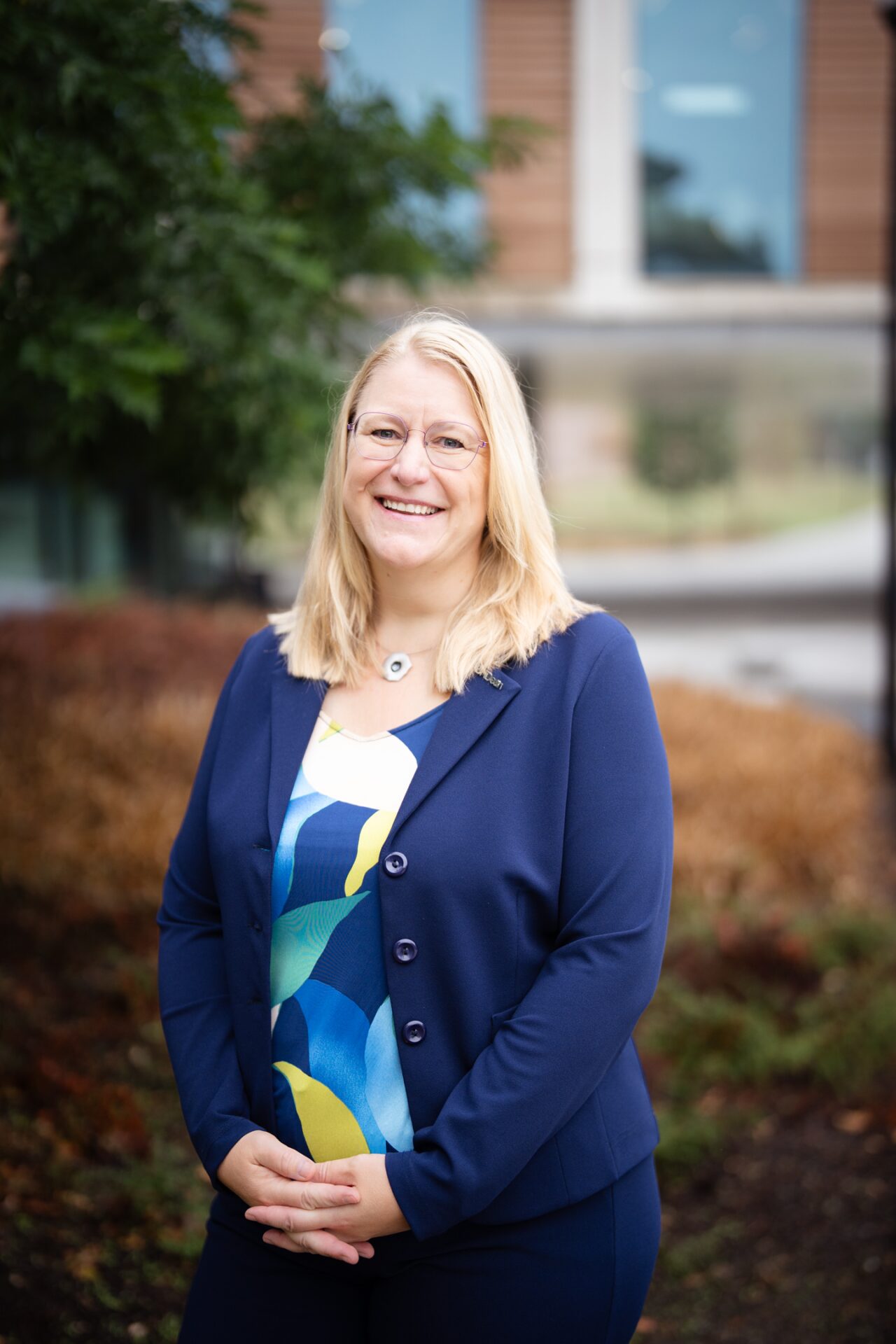
 De decaan bij het Maria Montessorigebouw. Foto: Johannes Fiebig
The fraud committed by the dismissed associate professor in psychology may partly be a consequence of the COVID-19 crisis. That is what Evelyn Kroesbergen, dean of the Faculty of Social Sciences, says in her first public response to the case. 'In the past, people were often paid off when fraud was suspected.'
The moment she had to dismiss Yannick Griep is one of the most difficult moments in her four years as dean, Evelyn Kroesbergen says in a conversation with Vox. In 2024, the associate professor was summarily dismissed for invoice fraud.
That turned out to be just the tip of the iceberg. An investigation by the Committee on Scientific Integrity later found that Griep had also fabricated or manipulated data in at least one article. That article has since been retracted at the authors’ request, along with seven other articles bearing his name. And according to one of his co-authors, Griep staged a peer review process in order to get an article published in a journal of which he himself was editor-in-chief.
Serious signals
An investigation by Radboud University into other publications by Griep, and into a doctoral thesis for which he supplied data, is still ongoing. In an interview marking her reappointment as dean, Kroesbergen responds publicly to the case for the first time.
Vox research showed that there had already been serious signals about Yannick Griep at universities in Canada and Brussels. Despite this, he ended up at Radboud University after those positions. What went wrong?
‘I don’t know. We were not aware that anything was going on. He provided references, those were contacted, but if you’re not expecting anything unusual, you don’t call a large number of people. I don’t actually know who was contacted. He was a lecturer — someone at that level is really hired at the departmental level.’
Do you hold the Canadians and the Belgians responsible in any way?
‘In my ideal world, we don’t keep these things secret. In the past, when fraud or other misconduct was suspected, people in the Netherlands were often paid off and dismissed with a non-disclosure agreement. These days we do things differently: we start an investigation, so that the fraud can actually come to light. I hold the entire academic world somewhat accountable for having dealt with this too casually. I am also not in favour of non-disclosure agreements.’
Has your faculty’s hiring policy changed in the meantime?
‘Certainly. Our entire procedure has been further professionalised, partly because we want to reduce bias. Our HR staff have also been trained to check for this kind of thing.’
Diederik Stapel was also a psychologist. Is it a discipline more susceptible to fraud? For instance because much of the research relies on questionnaires and is harder to reproduce?
‘If you want to do harm, you can commit fraud in any field. If you work with laboratory animals, you can also manipulate the numbers.’
But that is harder with particle physics…
‘I do think it is more susceptible to fraud than a particle physics experiment where other researchers are also present. But after the Stapel affair, a number of things changed in social psychology. Collaboration with multiple researchers became more common, methods are now recorded in advance, and data must be stored somewhere others can verify it. All kinds of mechanisms have been built into the social sciences. But in this case, I think the COVID period also played a role.’
In what way? Did COVID give the researcher more room to commit fraud?
‘Yes — you end up doing more things online and on your own. Look, let me put it this way: this person clearly circumvented those control mechanisms very deliberately. That’s what it looks like, at any rate. And no workable system is safe enough to prevent that.’
‘I am someone who wants to give people a second, third, or even fourth chance’
He was a staff member who posted a photo of himself on the university website wearing a mantle and a crown. He wrote rather idiosyncratic author biographies for his articles. Were alarm bells ever raised during his time here?
‘In some fields that kind of thing is not unusual. But I did ask about it afterwards. And then you hear: yes, in our field that happens more often, and it’s seen as a sign of creativity.’
A CV full of short appointments at various foreign universities wasn’t suspicious either?
‘For someone who wants to become a professor as quickly as possible and build up international experience, that’s not unusual.’
Do you feel any sympathy for him, given all the publicity that followed his fraud case?
‘I cannot escape the impression that he committed fraud knowingly and deliberately. Perhaps it happened under pressure. We are a social sciences faculty here: what an individual does is never purely down to that individual — there is an entire context surrounding it. But when you ask how it affects me personally, or whether I feel sympathy for him — it feels different here. The moment I had to dismiss him was truly one of the most difficult moments in my entire four years as dean. I am someone who wants to give people a second, third, or even fourth chance, because I genuinely believe that every person has good in them. But at the time it concerned an invoicing matter. We had far less information then than we do now, and yet a decision had to be made.’
Two cases are currently pending at the Committee on Scientific Integrity — one into Griep’s other articles, one into the doctoral thesis of a PhD candidate for whom he supplied data. Can you say anything about the timing of those investigations?
‘I am waiting anxiously. I hope we will know something very soon, but I genuinely don’t know.’
This interview was previously published online without giving Yannick Griep the opportunity to respond. We have since offered him that opportunity. According to Griep, the article contains factual inaccuracies; he did not provide further clarification.